English
 Español
Car Roof Rail Buffing
- Unit Type
- Custom robotic buffing cell
- Robot Brand
- ABB, FANUC or KUKA, selected for the project
- Robot Weight
- 20-2300kg
- Buffer Machine
- 1-6 set
- Polishing Consumables
- Cloth or sisal wheels, selected after trials
- Application
- Car roof rails and luggage rack components
- Control System
- Siemens or Schneider PLC
Custom Buffing for Long Automotive Roof Rails
Automotive roof rails combine long surfaces, curved profiles and highly visible areas. Buffing these parts requires stable support and a suitable contact angle along the specified surfaces, including transitions near the ends.
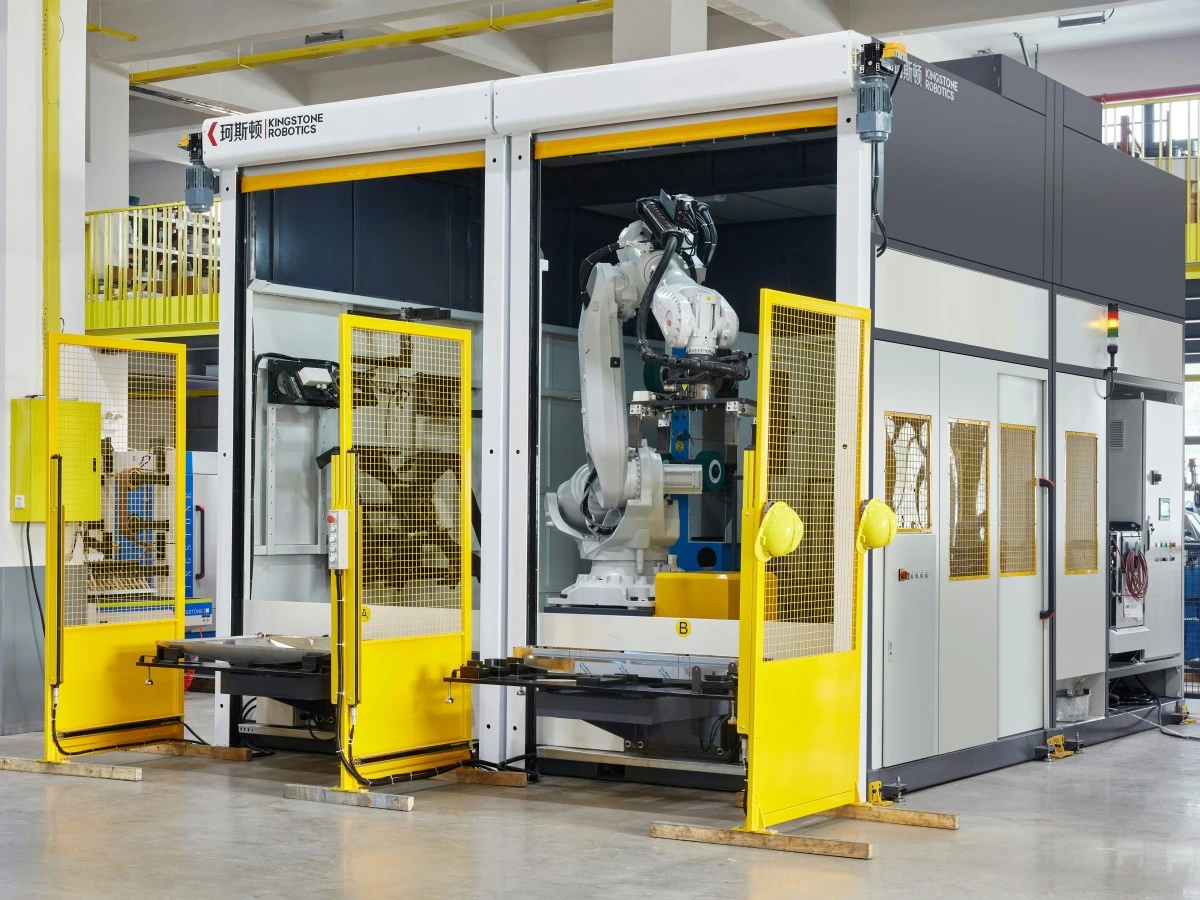
Kingstone plans robotic roof rail buffing around the actual component and its required appearance. Workholding, wheel selection and robot motion are considered together, with the process evaluated on representative production samples.
Two Robotic Buffing Layouts for Roof Rail Production
Robot-Held Workpiece with Fixed Buffing Stations
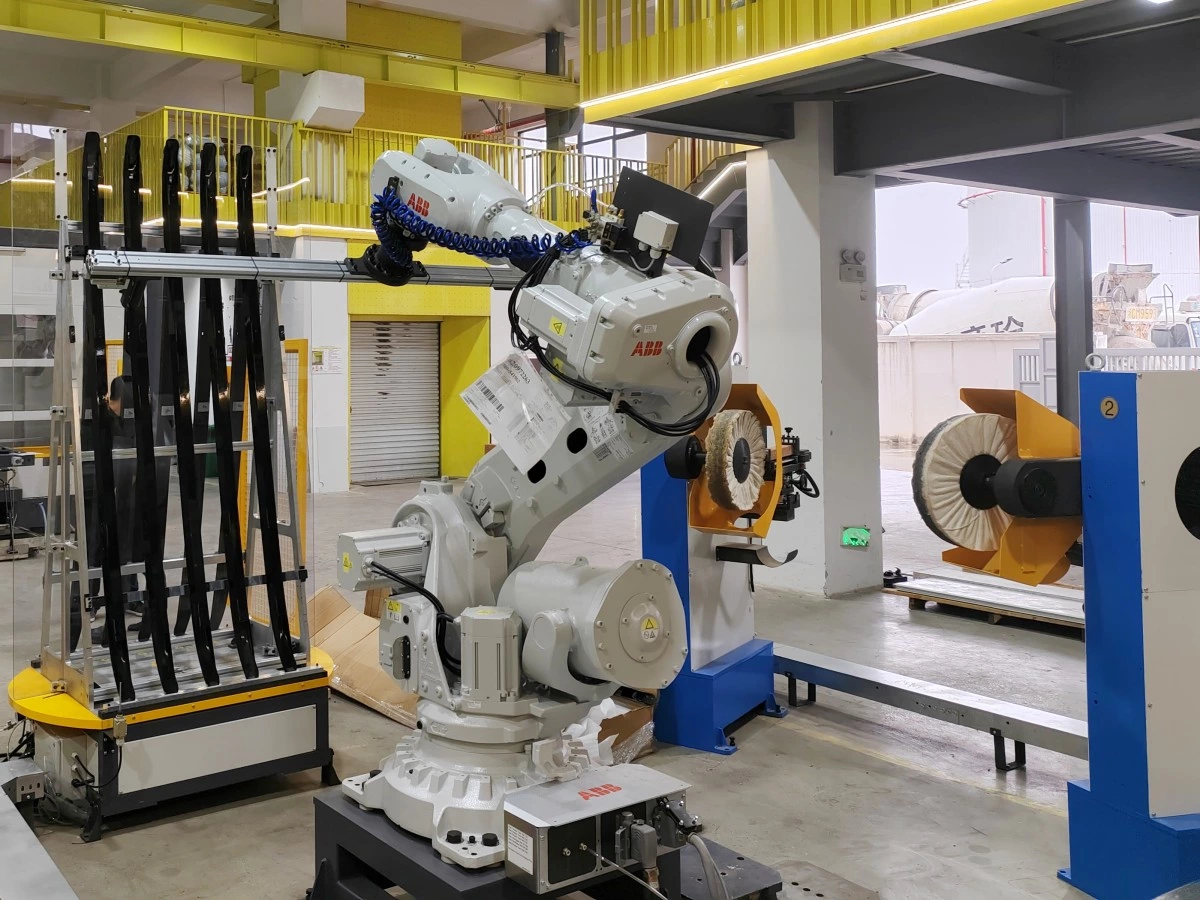
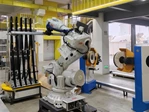
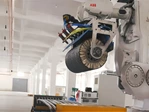
In this arrangement, a gripper holds the roof rail while the robot presents the specified surfaces to fixed buffing wheels. The robot changes the component orientation as it moves through the finishing sequence.
Planning focuses on secure gripping, wheel access and sufficient clearance for the complete rail. Robot selection must account for the component, gripper and handling requirements throughout the working envelope.
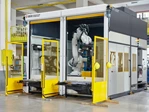
The project photo shows a workpiece-handling robot, a nearby part rack and fixed buffing stations.
Robot-Held Buffing Tool with Supported Workpieces
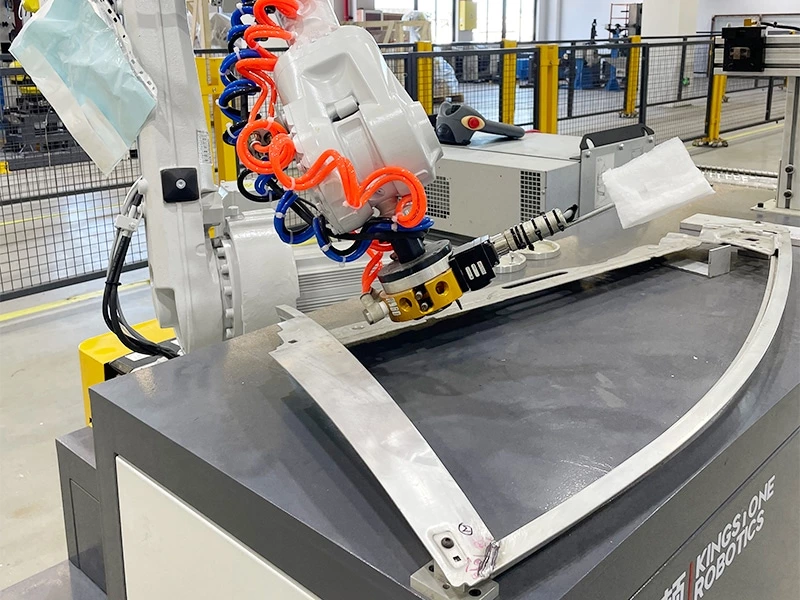
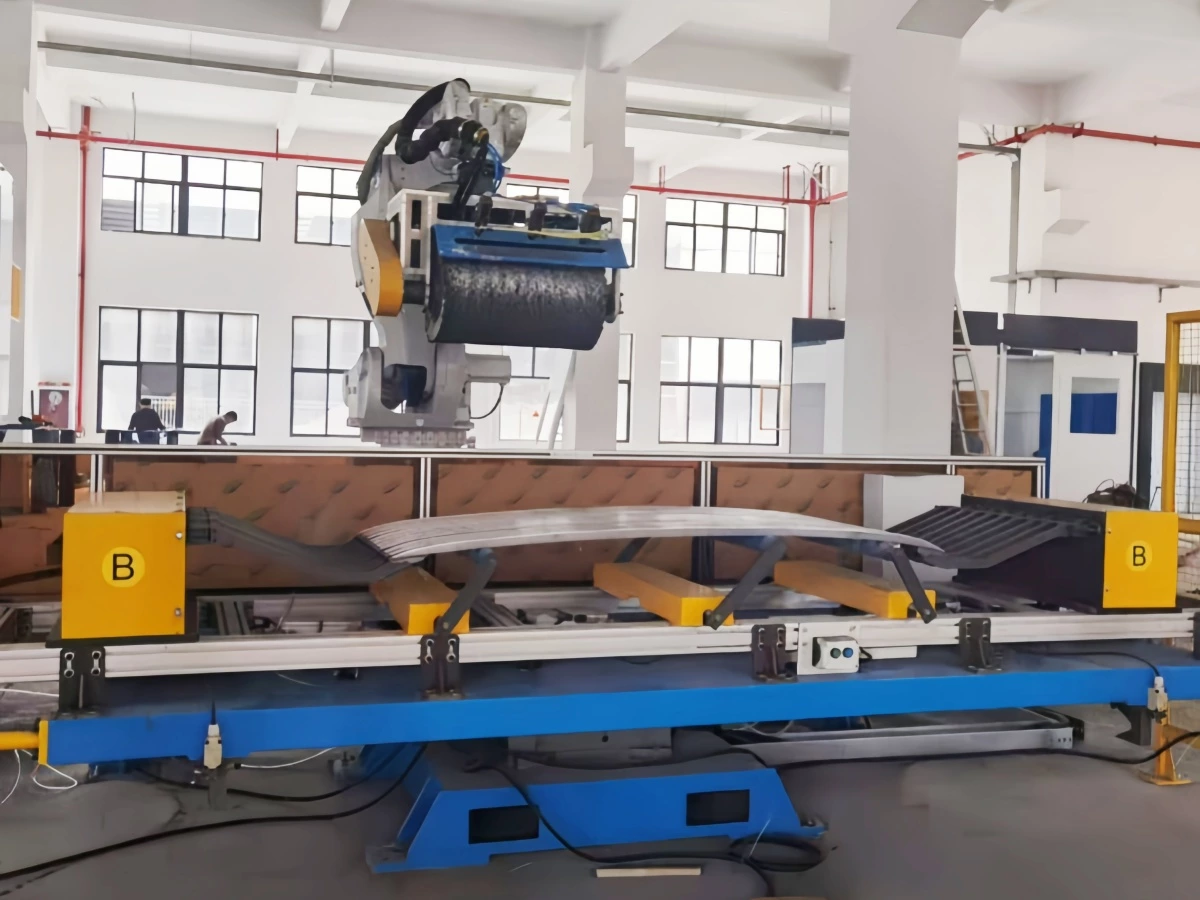
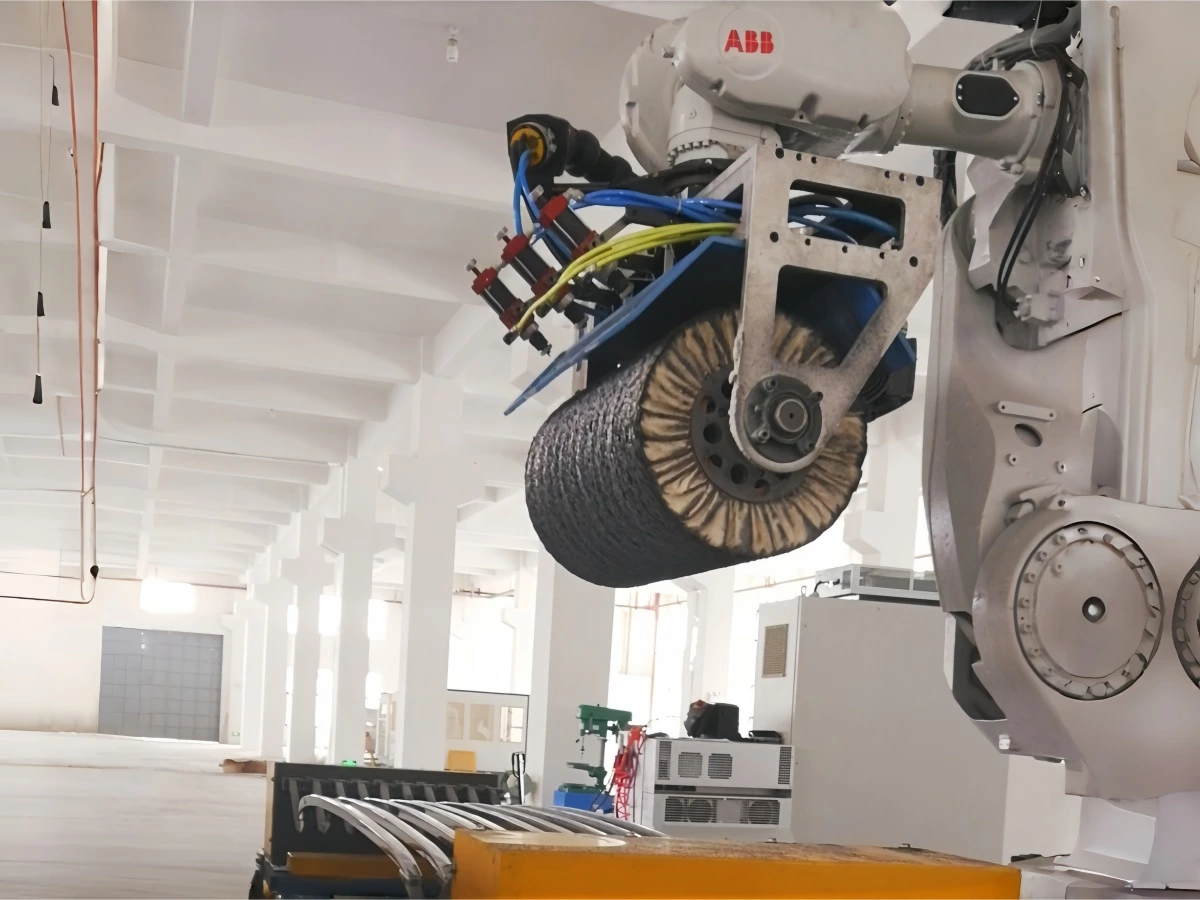
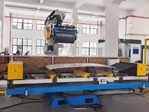
In the second arrangement, the roof rails remain supported in a fixture while the robot carries the buffing tool over the required surfaces.
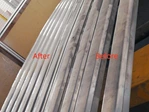
The project photos show several rails positioned on a common fixture beneath a robot-mounted buffing head. Fixture support and spacing must allow the tool to reach the target areas while keeping each rail securely located.
Loading several parts on a fixture changes the handling arrangement. Production output is evaluated using the complete loading, buffing and unloading cycle.
Workholding for Long and Curved Components
Long rails need support that limits movement during wheel contact. The fixture must also leave the required finishing surfaces accessible and protect areas where clamp marks would be unacceptable.
Important planning points include:
- Locating each rail consistently before the cycle starts.
- Supporting sections that may deflect under finishing pressure.
- Providing clearance around curved ends and changes in profile.
- Keeping clamps clear of the specified visible surfaces.
- Evaluating left-hand and right-hand parts as separate geometries.
Related guidance: Fixture Design for Robotic Grinding and Polishing.
Matching the Process to the Incoming Surface
The starting condition of the rail determines the finishing sequence. Parts with a suitable prepared surface may proceed to buffing, while deeper scratches or pronounced forming marks may require an earlier abrasive preparation stage.
Wheel type, compound, contact angle and travel speed are selected for the material and target appearance. Particular attention is given to transitions between straight sections and curved ends, where contact conditions change.
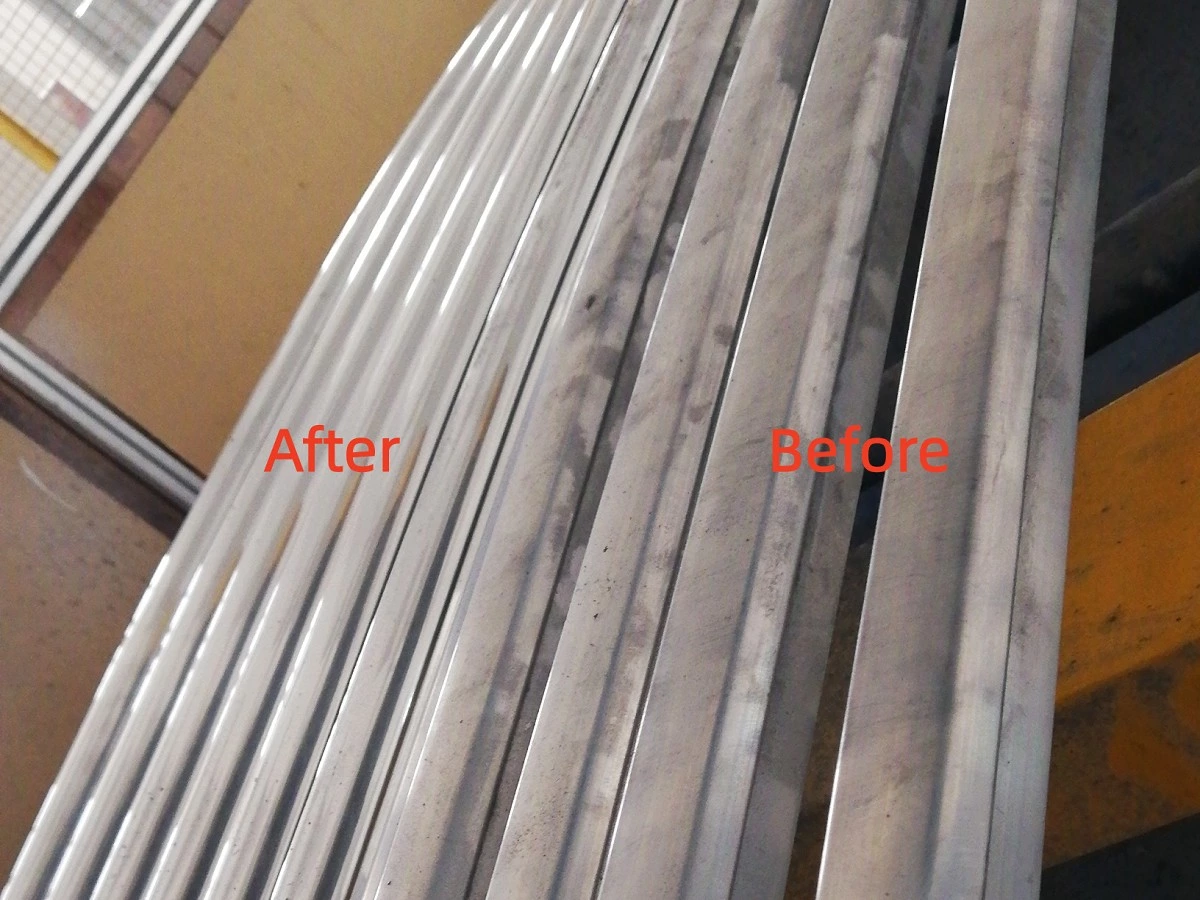
The proposed process is checked against an approved finish sample. A bright appearance alone does not establish acceptance: remaining marks, local over-polishing and consistency along the rail also need evaluation.
Custom Cell Configuration
| Item | Project Configuration |
|---|---|
| Application | Car roof rails and automotive luggage rack components |
| Buffing layout | Robot-held workpiece or robot-held buffing tool |
| Robot options | ABB, FANUC or KUKA, selected for the project |
| Robot sizing | Reach and payload assessed for the component, fixture or tool |
| Buffing stations | Number and arrangement matched to the finishing sequence |
| Consumables | Cloth or sisal wheels, selected through process evaluation |
| Workholding | Custom gripper or support fixture for the rail geometry |
| Control options | Siemens or Schneider PLC, according to project requirements |
| Surface preparation | Additional abrasive stages assessed where required |
| Guarding and extraction | Specified for the cell layout, material and finishing process |
| Production cycle | Confirmed through trials using the agreed part and finish criteria |
The final specification is defined after reviewing the drawings, production samples, available floor space and required output.
Sample Testing and Acceptance
A useful trial starts with parts that represent normal production variation. Provide incoming samples together with an approved finished sample or a clear description of the required appearance.
The evaluation should cover:
- Finish consistency along the specified visible surfaces.
- Remaining scratches or preparation marks after cleaning.
- Appearance at curved ends and profile transitions.
- Workholding stability and any clamp-related marks.
- Repeatability across several representative parts.
- Complete cycle time, including loading, transfer and unloading.
Record the agreed inspection conditions and acceptance criteria before finalizing the production solution.
For preparation details, see Robotic Polishing Sample Testing.
Frequently Asked Questions
Which buffing layout should we choose?
The choice depends on part geometry, gripping access, tool access and production flow. A robot-held workpiece must be handled securely through the required orientations. A robot-held tool requires suitable support and access around the fixed rail.
Can the machine produce a mirror finish?
A mirror finish can be assessed as a project target. Feasibility depends on the material, incoming surface, preparation stages and accessible geometry. The required result should be agreed using representative samples.
Can one cell process different roof rail models?
Compatible models may share a cell with suitable fixtures, programs and changeover arrangements. Differences in length, curvature and visible-surface requirements need to be reviewed and validated for each model.
What determines the cycle time?
Cycle time depends on the surfaces to be finished, preparation requirements, number of passes, handling method and fixture arrangement. A meaningful quotation should relate output to an agreed part and finish standard.
Request a Roof Rail Buffing Evaluation
Send your roof rail drawings or clear photographs, material grade, incoming surface condition and required finish. Please also include the number of part models, target output and available installation space.
Kingstone can review the application and propose a suitable buffing layout, fixture concept and sample-testing plan.