English
 Español
Gearbox Housing Grinding and Deburring
- Unit Type
- Robotic Gearbox Housing Grinding and Deburring Cell
- Robot Brand
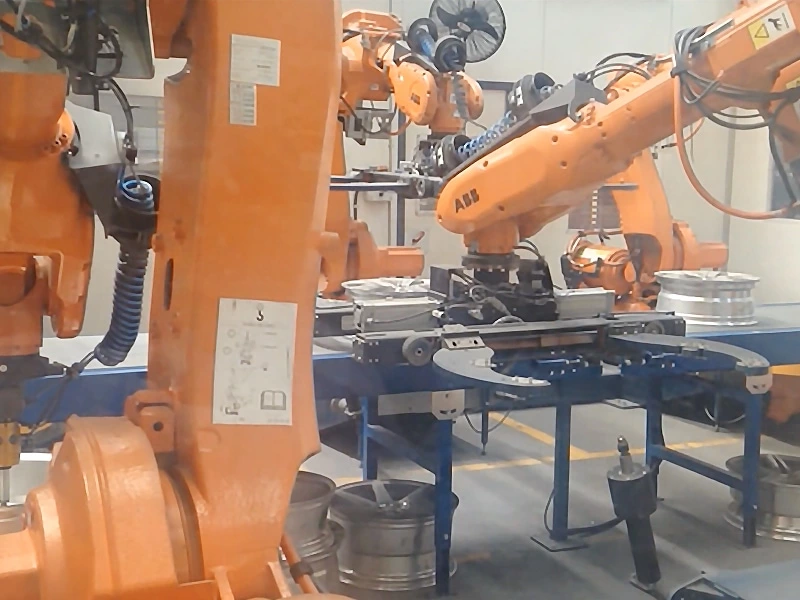
- ABB, KUKA or FANUC, selected for the application
- Robot Weight
- 60-2300KG; Payload, reach and wrist load matched to the tooling and handling arrangement
- Sander Machine
- 2-6 set; Deburring and grinding stations configured for the specified removal areas
- Workpieces
- Gearbox housing; Automotive parts
- PLC Brand
- Siemens or Schneider, according to the project specification
- Grinding Consumables
- Selected for the housing material, burr condition and required edge finish
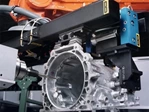
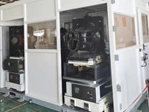
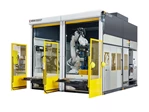
Robotic Deburring for Gearbox and Reducer Housings
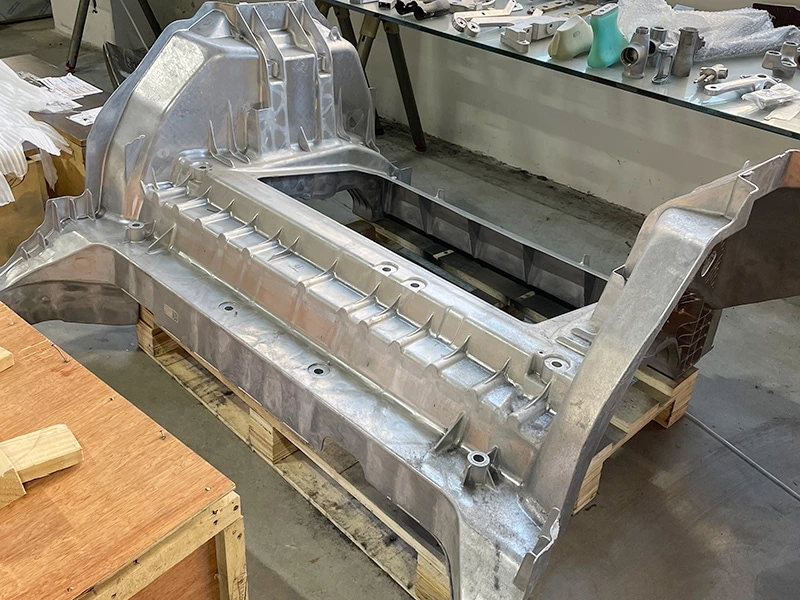
On a gearbox housing, unwanted material can sit close to a sealing face, bearing seat, mounting hole or thin rib. The process needs a defined removal area and an agreed edge condition so that functional features remain within the drawing requirements.
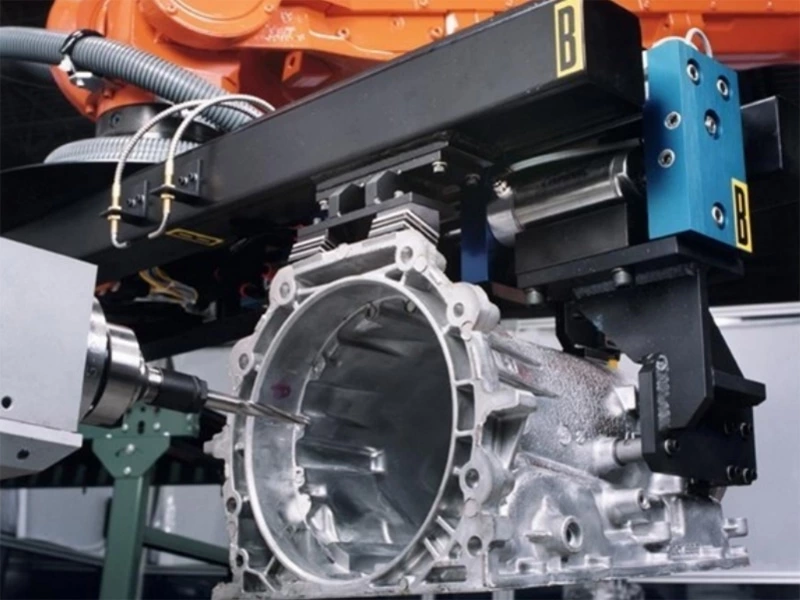
Kingstone develops robotic deburring systems for gearbox, transmission and reduction gearbox housings. Each application is reviewed around the housing material, incoming burr condition, tool access and production requirements. Casting cleanup and post-machining deburring are defined as separate tasks within the proposed process.
Housing Areas and Removal Tasks
The drawing or sample should identify both the material to remove and the surfaces to protect.
| Housing Area | Processing Task | Acceptance Focus |
|---|---|---|
| External casting parting lines | Grind specified raised material along accessible contours | Remaining line height and permitted base-material removal |
| Flash around the housing perimeter | Remove defined casting flash | Residual flash and the required edge profile |
| Accessible flange edges and bolt-hole entrances | Remove identified burrs after machining | Specified chamfer or edge break without damage to adjacent faces |
| Openings and recessed edges | Deburr features within the available tool access | Reach, clearance and the agreed edge condition |
Sealing faces, bearing seats, threads and gasket grooves are identified during process planning. Any chamfer or radius on a functional edge follows the drawing specification rather than an undefined rounding operation.
Workholding and Tool Access
Housing geometry determines how the part is located and how the tool reaches each removal area. The fixture must hold the housing against processing loads while keeping the specified edges accessible.
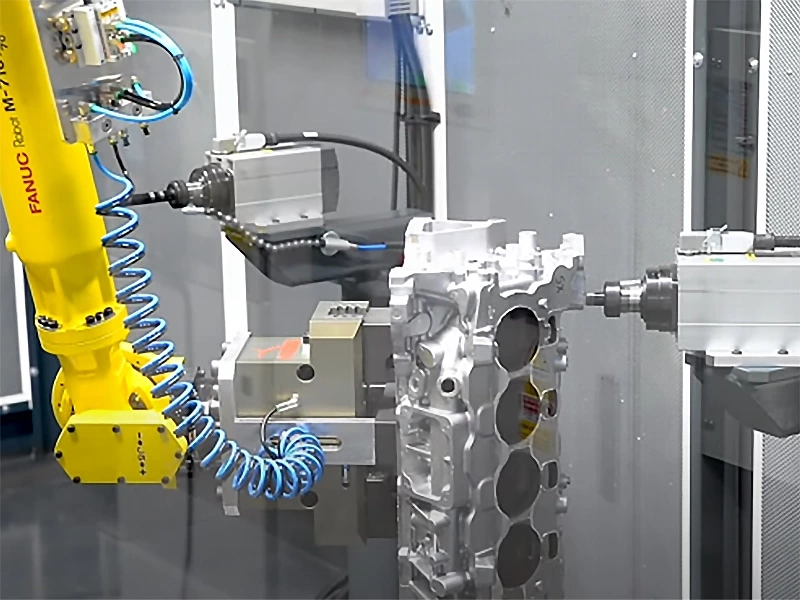
During the layout review, Kingstone assesses whether the robot should carry the tool or present the housing to a fixed processing station. The choice depends on housing weight, grip locations, working clearance and the required processing sequence. A positioner can be evaluated when additional orientations are needed.
Representative incoming parts are used to review casting variation and locating consistency. If compliance, sensing or additional position checks are needed, their functions are defined in the project specification.
Tool Selection for Casting Flash and Machining Burrs
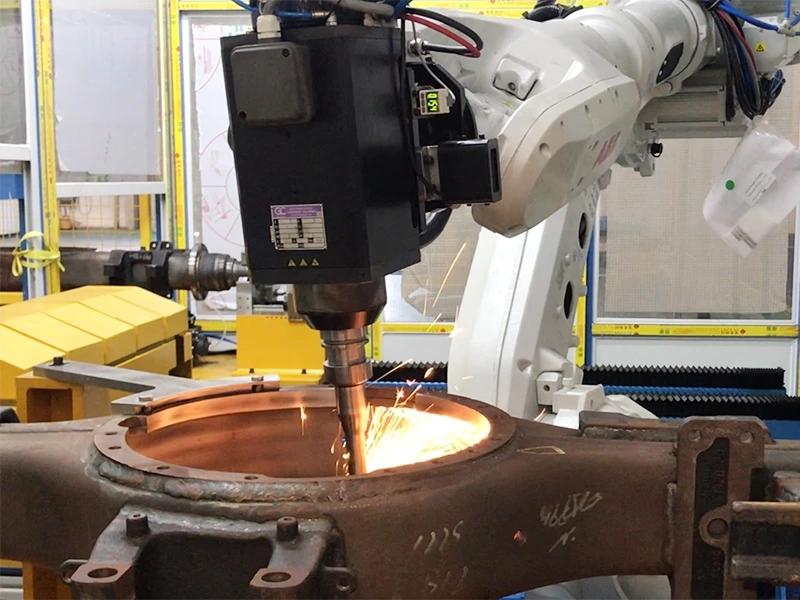
Aluminum-alloy and cast-iron housings require a process review for the actual material grade and burr condition. Tool selection may include rotary deburring tools, abrasive wheels or belt grinding stages, depending on the feature and removal requirement.
Thicker projections may require a separate cutting or grinding stage before fine edge finishing. Accessible machining burrs can require a different tool and contact strategy from external casting flash.
For an explanation of these process differences, see Robotic Deburring vs. Grinding vs. Polishing. For other casting geometries, review our casting grinding solutions.
Plan the Cell Around the Machining Sequence
Casting flash removal is often considered before machining, while burrs created by drilling, milling or other machining operations require a later processing stage. The cell is planned for the actual point at which the housing enters the process.
A typical planning sequence includes:
- Locate and clamp the housing using the agreed reference features.
- Process the marked parting lines, flash or machining burrs.
- Reorient the part or change processing stages where required.
- Check the finished edges and relevant protected features.
- Transfer the housing to the agreed cleaning or downstream operation.
Loading, inspection and cleaning arrangements are specified with the customer. These operations are included in the equipment scope where agreed in the proposal.
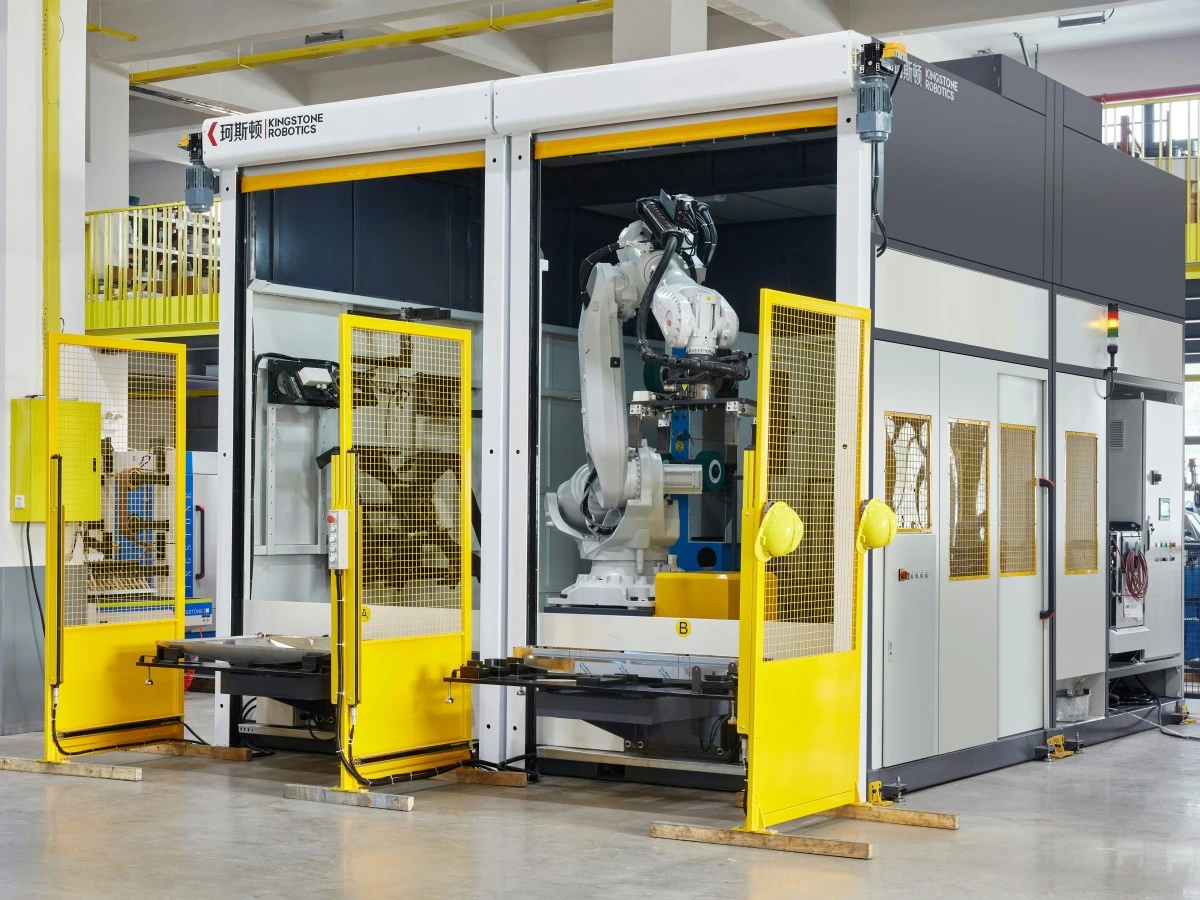
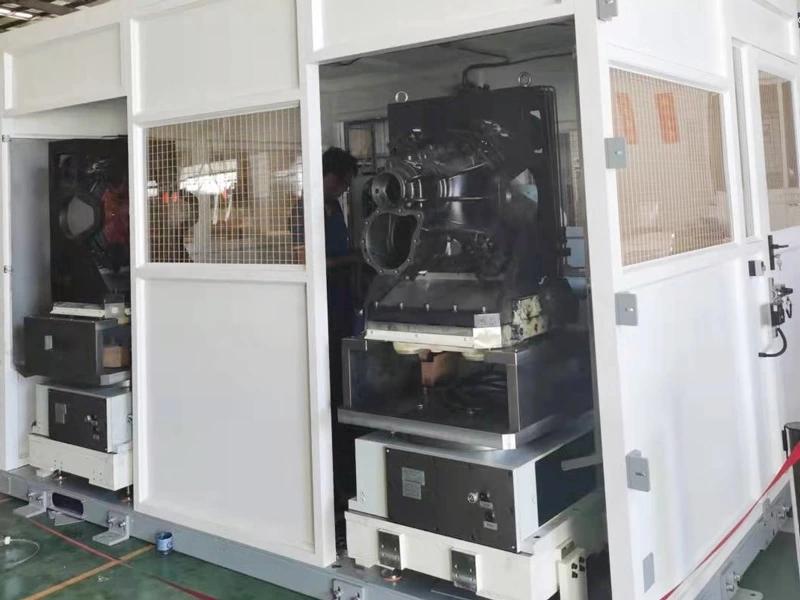
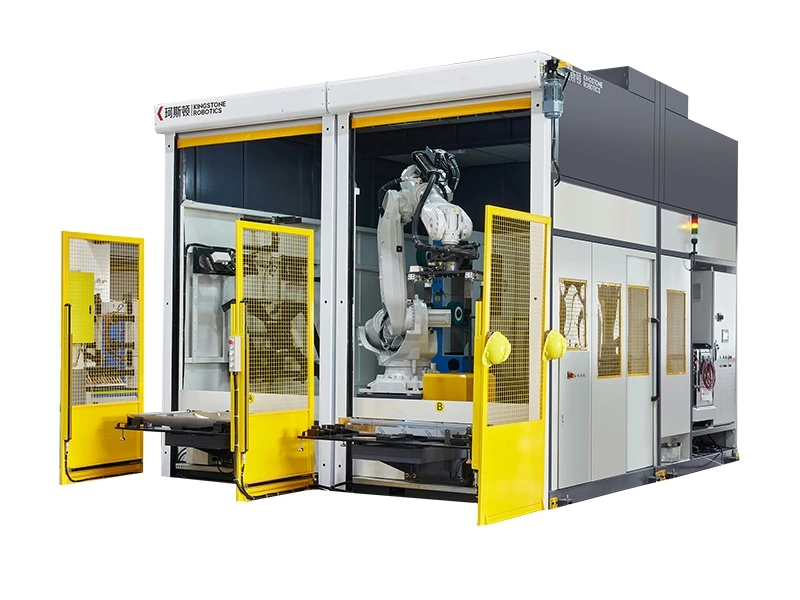
Noted: Example enclosed robotic workstation. The final configuration is selected for the housing and processing requirements.
Validate Edge Quality and Production Output
Acceptance is based on a defined housing and an approved result. The trial should include representative parts covering the expected incoming burr range.
Review the following during validation:
- Residual flash or burrs at the marked locations.
- Chamfer, radius or edge-break dimensions where specified.
- Condition of nearby sealing faces, bearing seats and threads.
- Evidence of gouging or removal outside the permitted area.
- Relevant dimensions and cleanliness after the agreed cleaning stage.
- Complete cycle time, including loading, positioning and unloading.
Tool condition and replacement criteria should be recorded with the trial results. Production output is then assessed for the approved housing model, processing sequence and handling arrangement.
Frequently Asked Questions
Can Kingstone review aluminum and cast-iron gearbox housings?
Yes. Both aluminum-alloy and cast-iron housing applications can be reviewed. Tooling, workholding and processing settings are selected for the actual material grade, geometry and required result.
Can the system remove burrs inside the housing?
Accessible internal edges can be assessed from drawings and samples. Deep cavities, intersecting passages and obstructed features need an individual access review to determine the appropriate tool and processing method.
Can the cell be used after CNC machining?
Yes. Post-machining deburring can be planned for specified accessible edges and hole entrances. Finished sealing faces, bores, threads and other precision features are included in the protection and inspection requirements.
Can one cell process several housing models?
Compatible models may share a cell with suitable fixtures, tools and programs. The application review checks the size range, locating features, access requirements and changeover method for each model.
Request a Gearbox Housing Deburring Proposal
Send your housing drawing or 3D model, together with clear photographs showing the burrs and required removal areas. Include:
- Material grade, overall dimensions and part weight.
- Whether the housing arrives before or after machining.
- Burr locations, approximate size and expected variation.
- Edge requirements and surfaces that must be protected.
- Required output, loading method and available floor space.
Kingstone can review the application and propose a tooling concept, workholding arrangement and robotic cell layout. Use the inquiry form to share your drawings and processing requirements.