English
 Español
Brass Faucet Grinding
- Unit Type
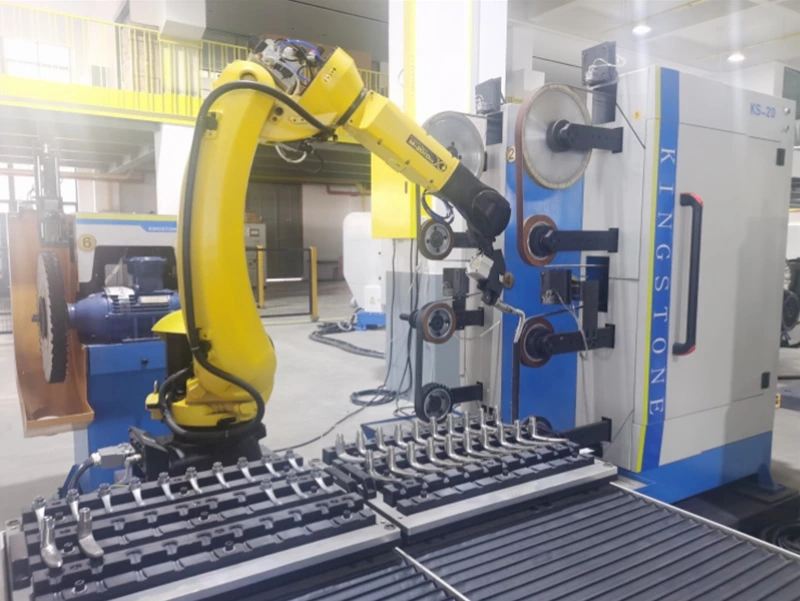
- Grinding Unit With Robot
- Robot Brand
- ABB, KUKA or FANUC; subject to project selection
- Robot Weight
- Selected according to the workpiece, gripper and fixture requirements
- Sander Machine
- Belt grinding stations configured for the required process sequence
- Workpieces
- Brass, copper
- Grinding Consumables
- Sand Belt; foam wheel, sanding wheel, rubber wheel
- Application
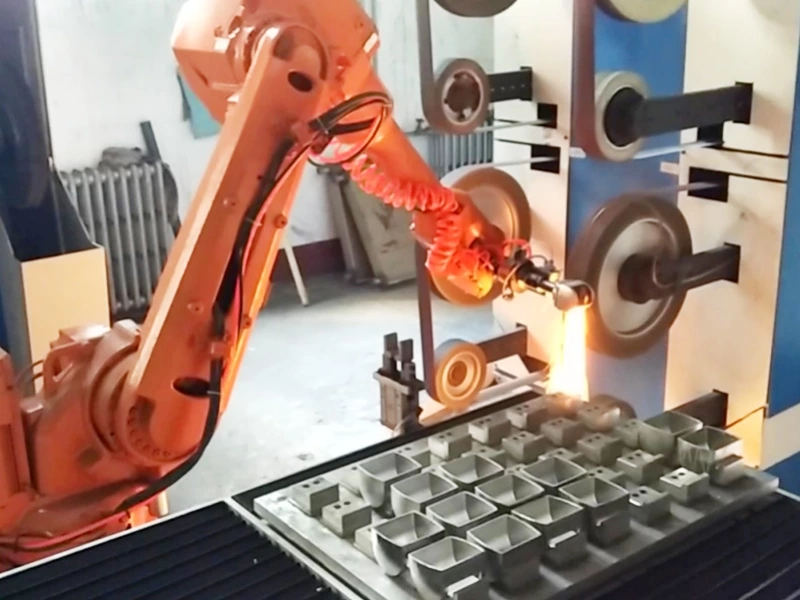
- External surface grinding of brass faucet components
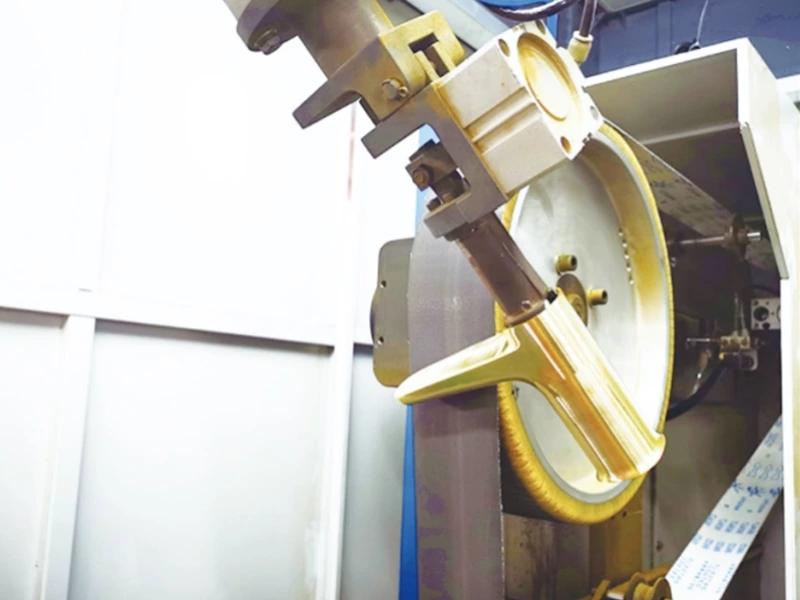
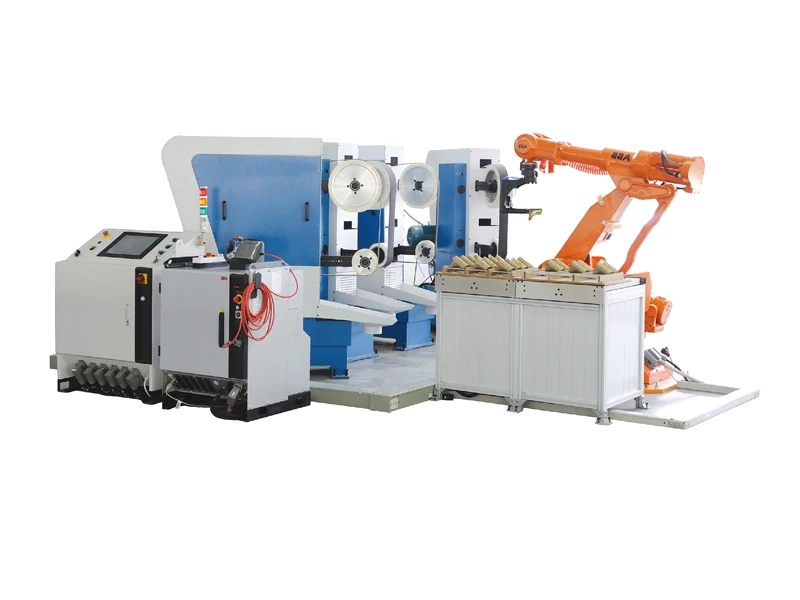
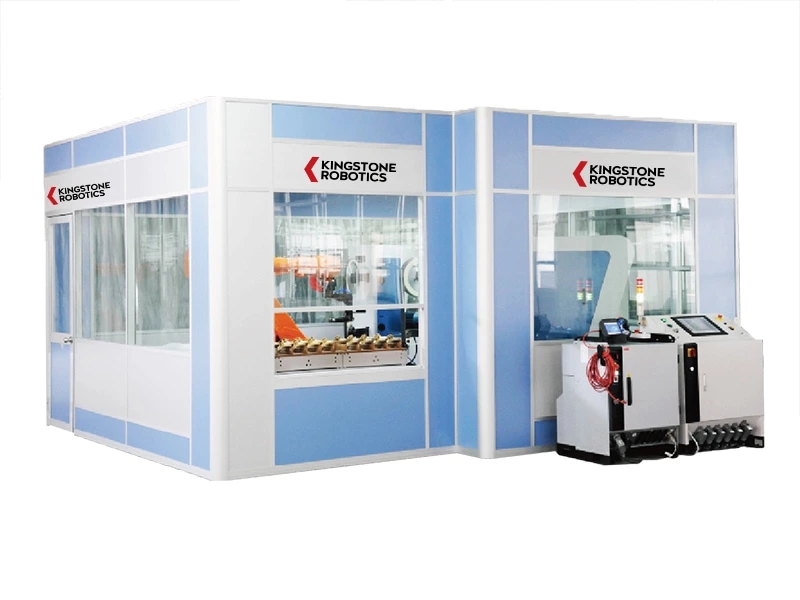
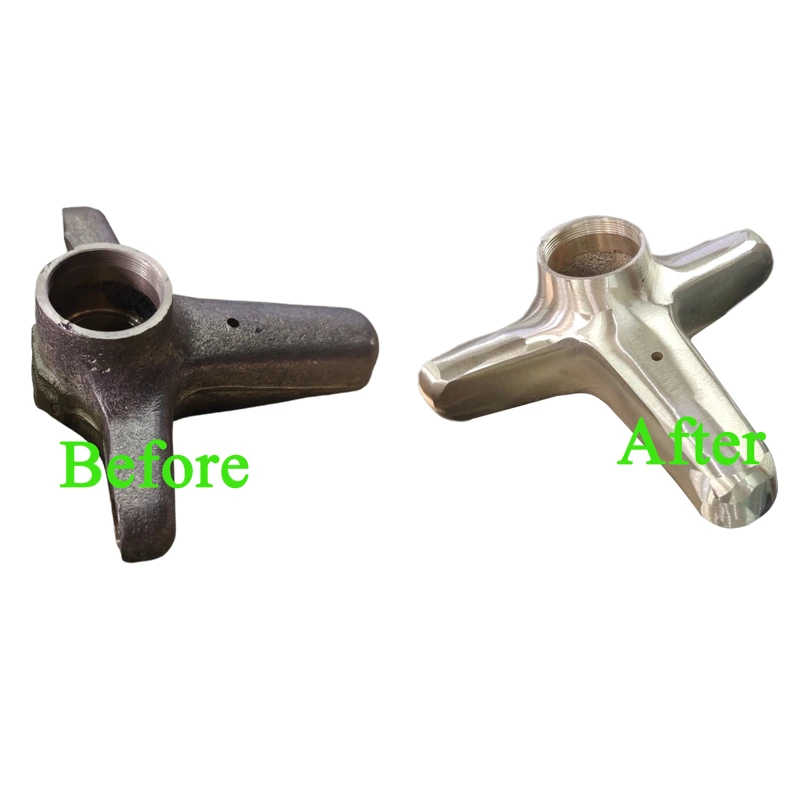
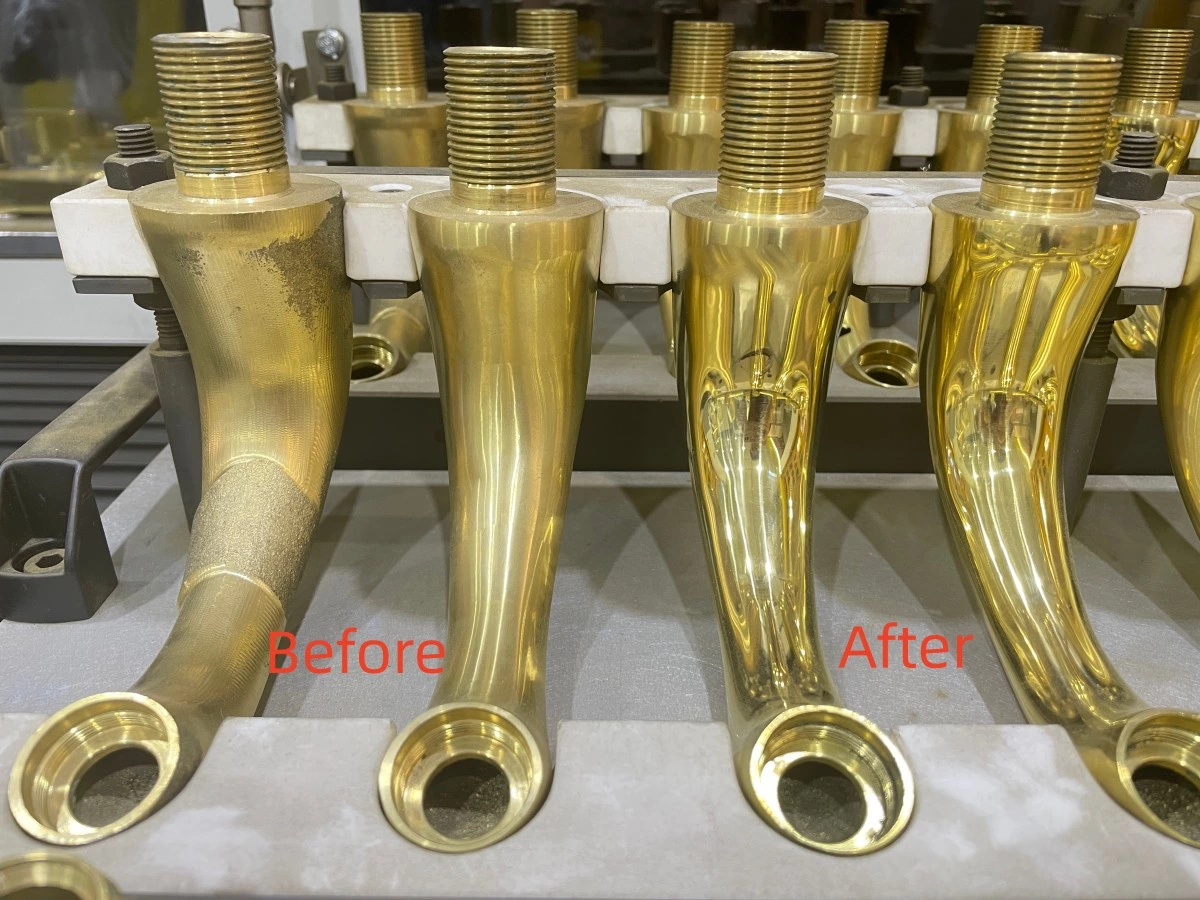

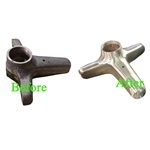
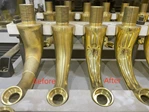
Robotic Belt Grinding for Brass Faucets
Brass faucet bodies often need several surface preparation steps before decorative polishing or plating. The grinding process must address the specified marks while preserving the shape of the component and the surfaces needed for assembly.
Kingstone configures robotic grinding cells around the faucet part and its required process. A six-axis robot, abrasive stations and dedicated workholding are selected together so that the programmed movements suit the surfaces to be processed.
The starting point is your component: its geometry, incoming condition, grinding areas and required surface result. These details determine the proposed cell configuration.
Grinding Tasks on Brass Faucet Components
The following tasks can be reviewed for accessible external surfaces of brass faucet bodies, spouts and related tap components:
- Removing specified casting parting lines and local flash.
- Reducing surface irregularities or marks left by an earlier operation.
- Blending selected areas and refining the grinding pattern before the next finishing stage.
The process scope depends on the amount of material to be removed and the areas the abrasive can reach. Internal passages, deep recesses and obstructed surfaces require a separate accessibility review.
Drawings should identify the surfaces that require grinding as well as those that must remain untouched. Threads, sealing faces, mounting surfaces and defined edges are considered when planning the fixture and robot path.
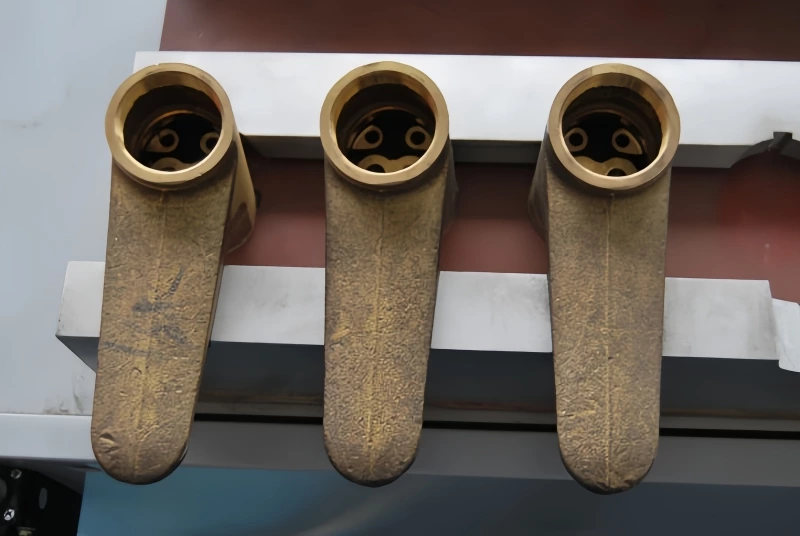
A Grinding Sequence Matched to Your Parts
1. Part Locating and Workholding
The fixture or gripper establishes a repeatable part position and supports the component during grinding. Locating and clamping points are selected with reference to the part geometry and the surfaces that need protection.
2. Initial Material Removal
Where the component requires material removal, the initial grinding stage addresses the specified parting lines, flash or surface marks. Abrasive selection and the programmed movements are developed around the incoming part condition.
3. Surface Refinement
A finer grinding stage can refine the scratch pattern where required. The sequence is selected for the next operation, whether that is additional polishing or another agreed finishing step.
4. Result Evaluation
The processed component is checked against the agreed grinding areas, surface requirements and dimensional limits. Trials establish the proposed process result and cycle time for the component being evaluated.
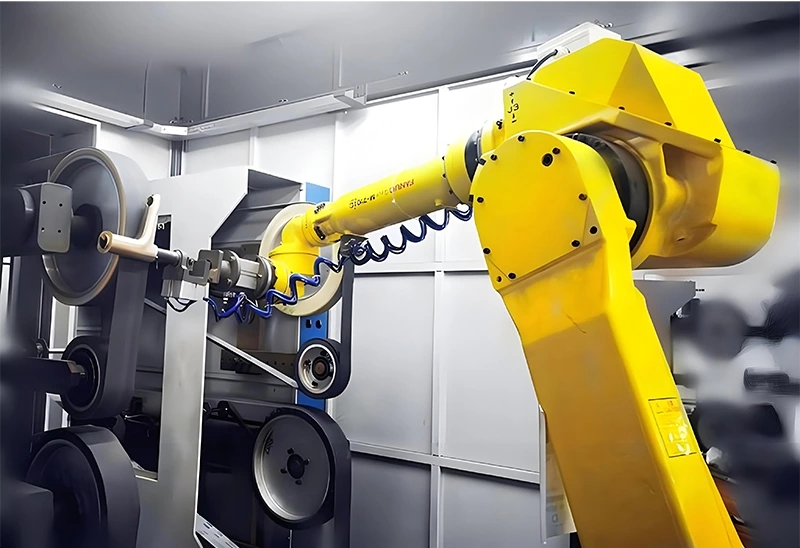
Robot and Fixture Configuration
Robot selection considers the component together with its gripper or fixture and the reach needed across the abrasive stations. The number and arrangement of grinding stations follow the required operations and the space available on the production floor.
For factories producing several faucet designs, the review also covers fixture changes, part orientation and the programs needed for each model. Whether different components can share a cell is assessed from their geometry and processing requirements.
Loading arrangements, enclosure requirements and dust control interfaces are discussed when defining the cell layout and equipment scope.
Preparing Surfaces for Polishing and Plating
Grinding and decorative polishing serve different stages of faucet finishing. This cell is configured around material removal and surface preparation. The required appearance and surface condition determine whether further polishing is needed.
For projects involving a subsequent polishing stage, explore our brass water tap polishing machine. Grinding and polishing requirements should be reviewed together so that the proposed process has a clear target for each stage.
Information Needed for a Solution Review
To evaluate your brass faucet application, please send:
- Part photographs or drawings, including dimensions and part weight.
- The material grade and incoming surface condition.
- Marked grinding areas and surfaces that must be protected.
- The required finish, or a reference sample showing the target result.
- Required output, product mix and available installation space.
This information supports the initial layout and equipment selection. Representative samples may be needed to confirm abrasive selection, process results and cycle time before the final equipment scope is agreed.
Frequently Asked Questions
Can the system process different faucet models?
Different models require suitable workholding and robot programs. We review their dimensions, geometry and grinding areas to determine whether they can share the proposed cell and what changeover arrangements are needed.
Can robotic grinding replace the final polishing stage?
That depends on the required finish. Grinding prepares the specified surfaces; decorative gloss or a more demanding surface requirement may need additional polishing. A reference sample helps define the process stages.
How is the cycle time determined?
Cycle time depends on the grinding area, incoming marks, material removal, number of stages and loading arrangement. A representative part trial is used to evaluate the process time for the proposed configuration.
How are threads and sealing faces handled?
Identify these areas on the drawing or sample. The fixture and programmed path are developed around the surfaces that must be protected, with the agreed result checked during process evaluation.
Can you provide an initial proposal from photographs?
Clear photographs and basic dimensions can support an initial review. Detailed drawings or physical samples may be needed to finalize accessibility, workholding, process results and equipment selection.
Request a Brass Faucet Grinding Solution
Send Kingstone your faucet drawings or sample photographs, identify the surfaces that need grinding and tell us your required output. We will review the application and discuss a robotic belt grinding configuration for your production requirements.