English
 Español
Robotic Polishing Cell vs CNC Polishing Machine: A Practical Selection Guide
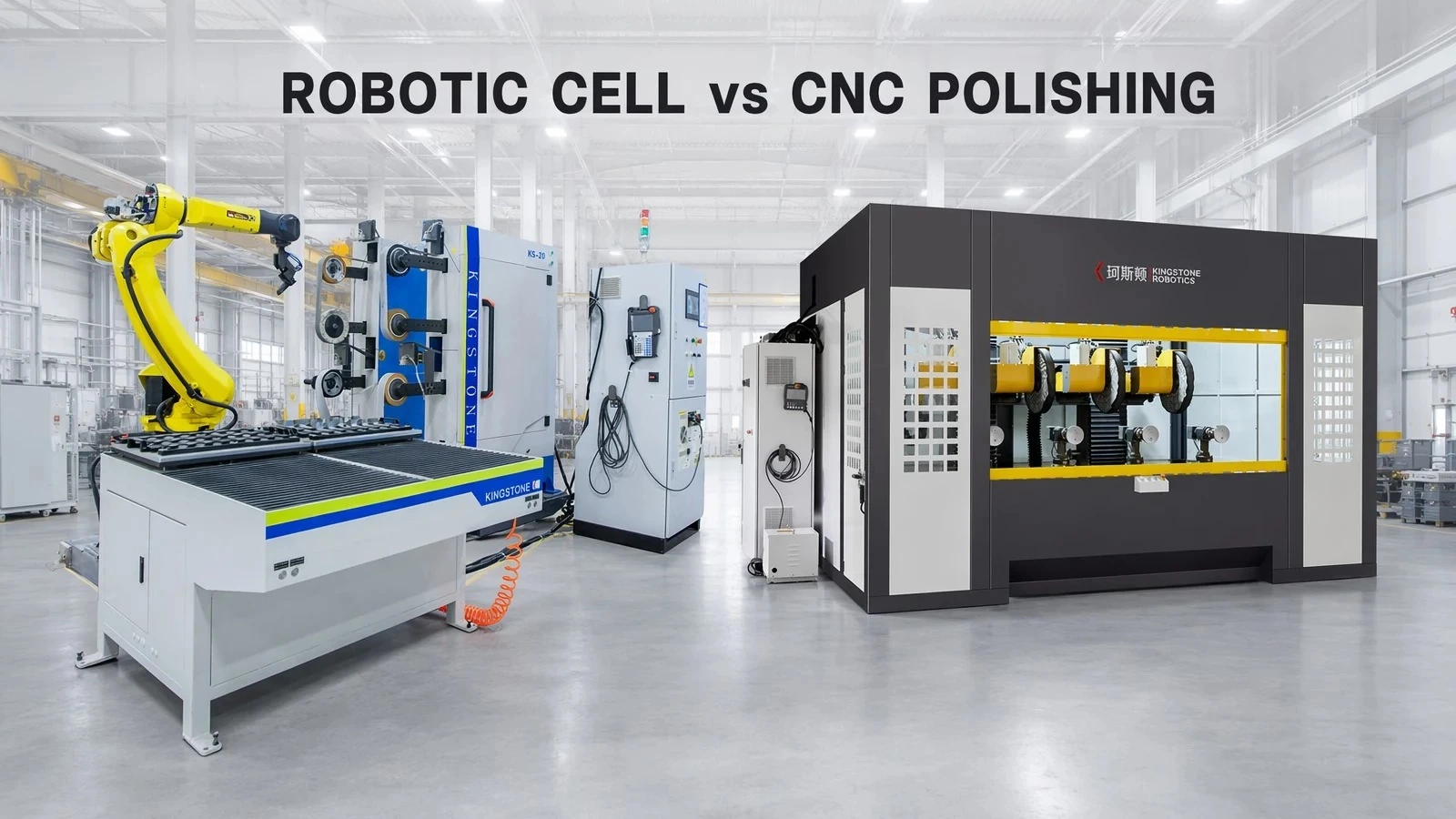
Manufacturers moving away from manual polishing often compare a robotic polishing cell with a CNC polishing machine. Both improve repeatability and reduce dependence on manual skills, but they solve different production problems.
Robotic cells suit complex three-dimensional parts, product variation, and multi-process finishing. CNC polishing machines suit stable workpiece families, repeatable paths, and simultaneous processing. Choose according to geometry, volume, finish specification, changeover frequency, and cycle-time targets.
What Is a Robotic Polishing Cell?
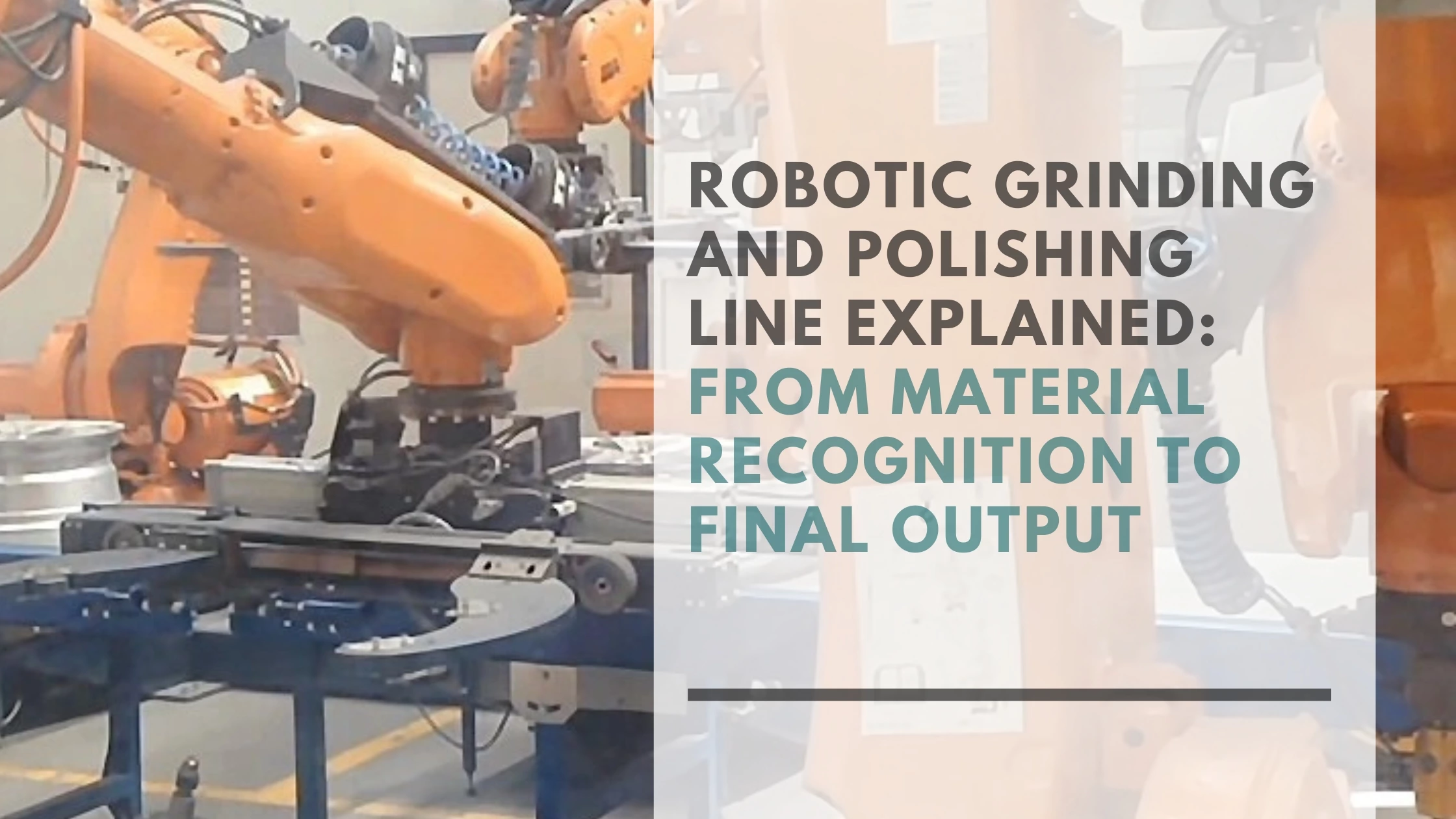
A robotic polishing cell combines an industrial robot with polishing or grinding equipment, fixtures, process tooling, control software, and safety protection. Depending on the application, the robot may move the workpiece against a stationary abrasive unit or carry the finishing tool around a fixed workpiece.
Because a multi-axis robot can approach a surface from many angles, the system is well suited to curved, irregular, or three-dimensional components. Programs can define the path, tool angle, speed, contact pressure, and processing sequence for each product.
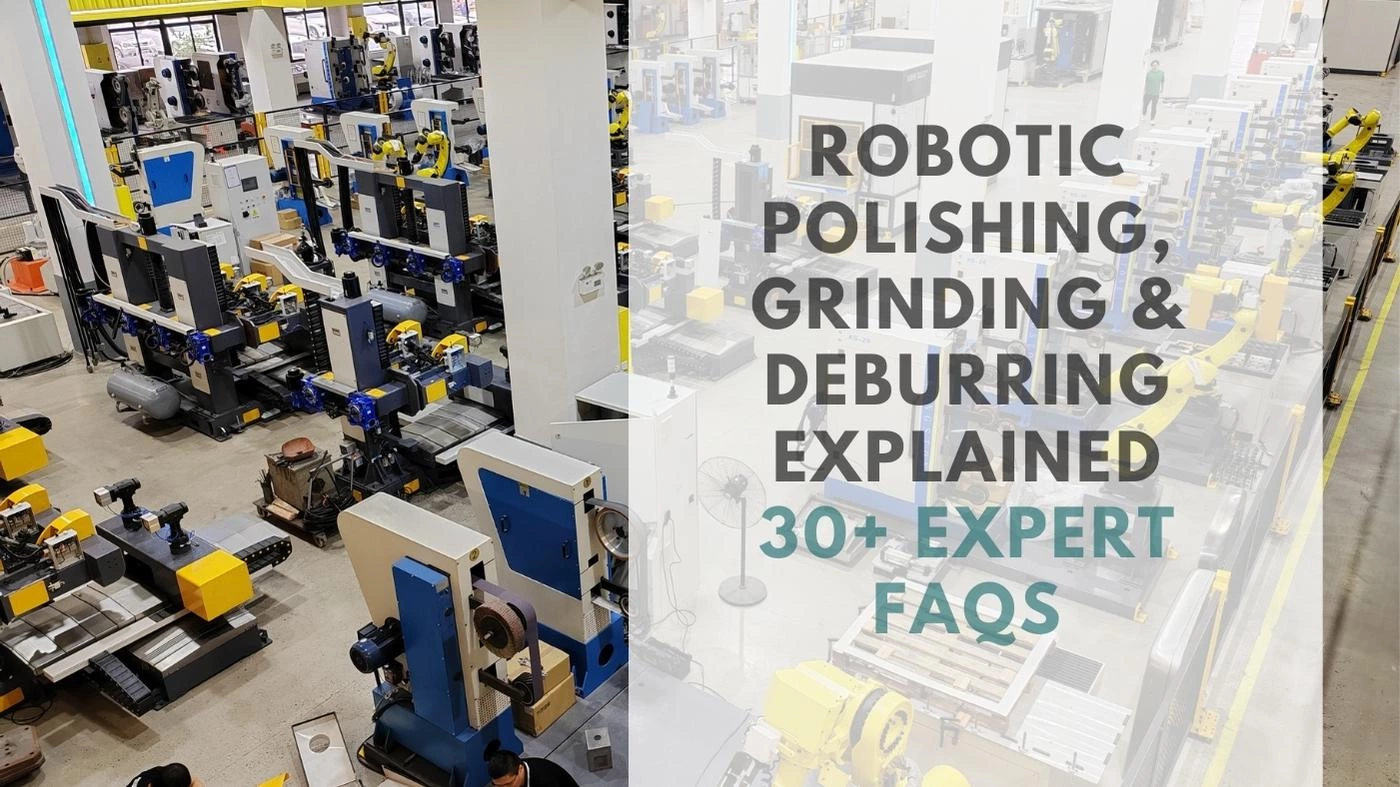
Kingstone's robot grinding and polishing unit is designed for automated surface finishing across applications such as sanitary hardware, automotive parts, medical components, electronics, and castings. A complete cell can incorporate belt grinding, polishing wheels, workpiece positioners, fixtures, dust control, and other process equipment around the robot.
What Is a CNC Polishing Machine?
A CNC polishing machine uses programmed axes, dedicated workholding, and polishing stations to move parts through a repeatable finishing cycle. It is commonly selected for product families with predictable geometry and stable production requirements.
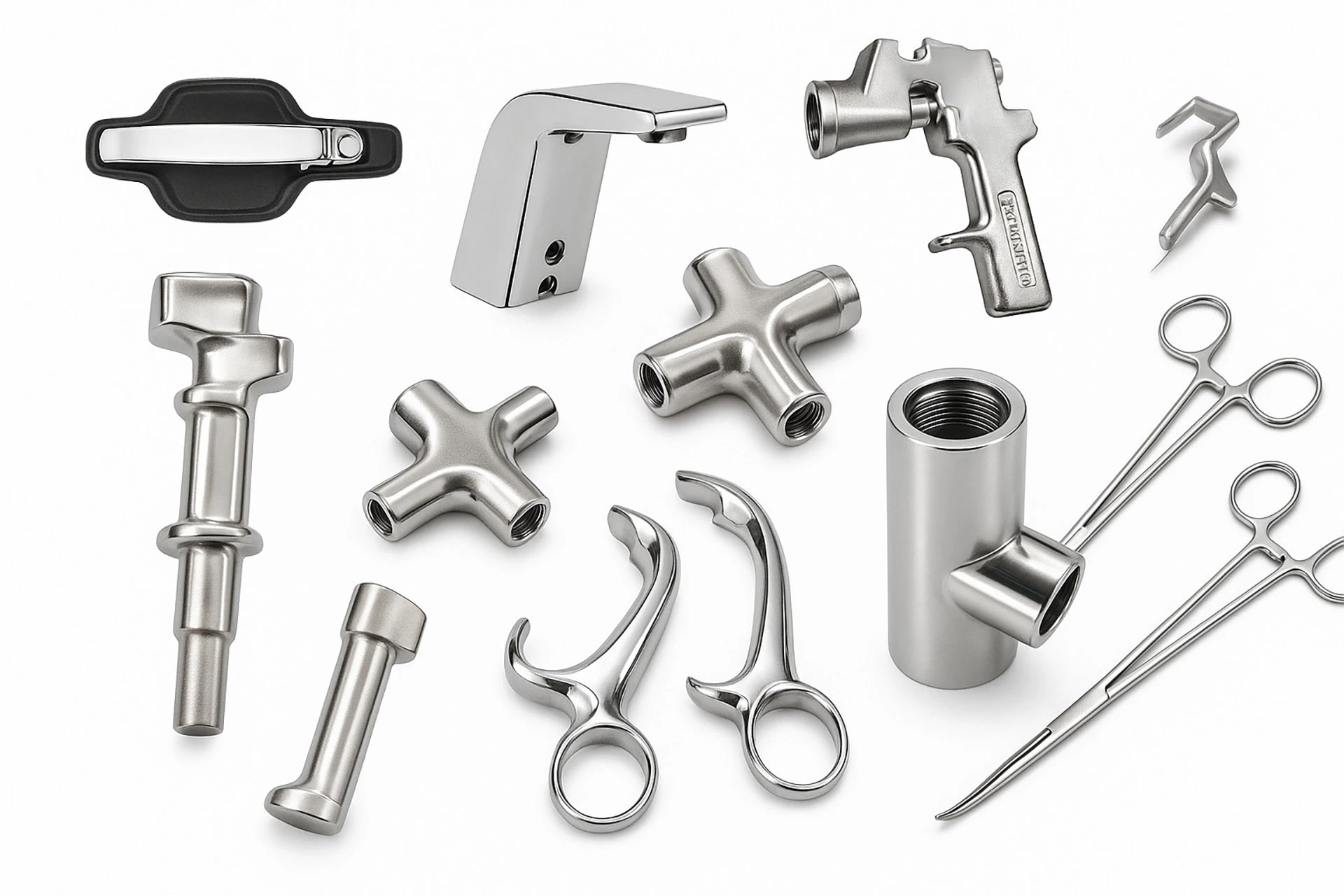
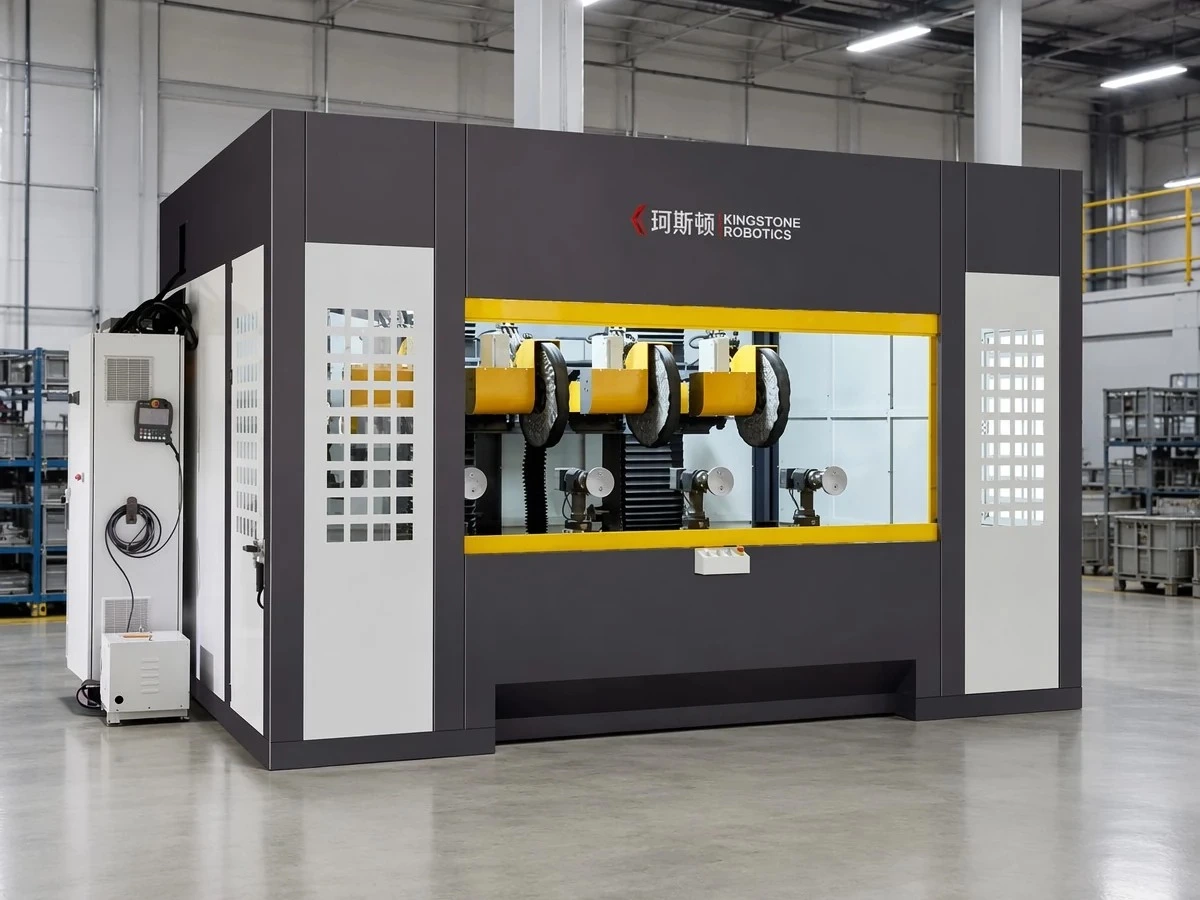
Kingstone's CNC polishing machine solutions can process multiple workpieces simultaneously. The existing configurations are intended for parts such as faucets, valves, door handles, door locks, and pot handles, with solutions capable of polishing two to eight workpieces at one time, depending on the machine design.
This architecture can provide high output when the same or similar parts are produced repeatedly. Its value comes from a controlled motion sequence, dedicated stations, and efficient use of multiple fixtures or polishing heads.
Key Differences at a Glance
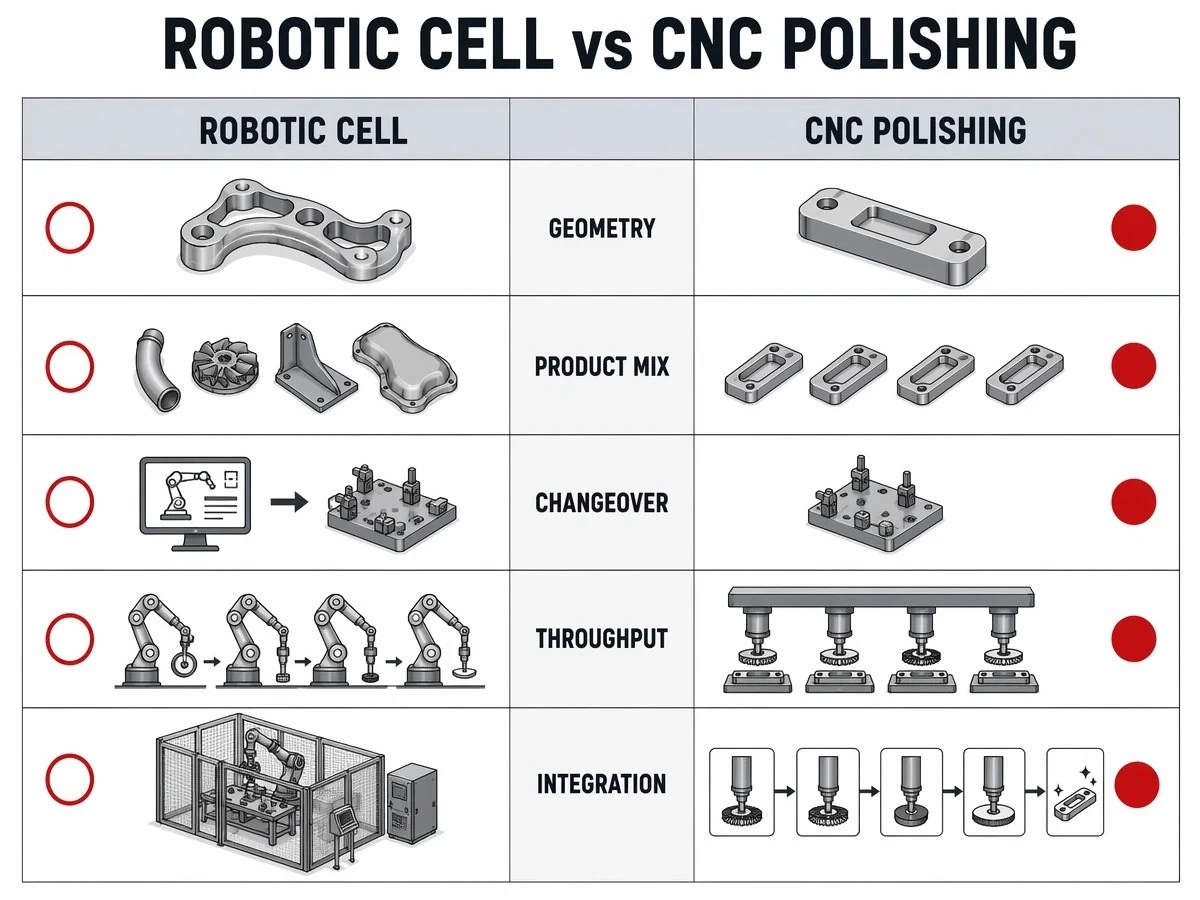
| Selection factor | Robotic polishing cell | CNC polishing machine |
|---|---|---|
| Part geometry | Strong fit for complex 3D contours and varying approach angles | Strong fit for stable, repeatable product geometries |
| Product mix | Better for multiple models and changing production | Better for long runs of similar parts |
| Changeover | New fixtures and programs can support additional products | Changeover may require dedicated fixtures and process adjustments |
| Throughput | Flexible; output depends on path length and cell layout | High potential when several parts run simultaneously |
| Process integration | Can combine grinding, polishing, deburring, handling, and inspection | Usually optimized around a defined polishing sequence |
| Footprint | Depends on robot reach, tools, enclosure, and loading method | Depends on station count, guarding, and workholding arrangement |
| Best business case | Flexibility, difficult surfaces, or several finishing steps | Repetitive volume production with a stable part family |
1. Start with Part Geometry
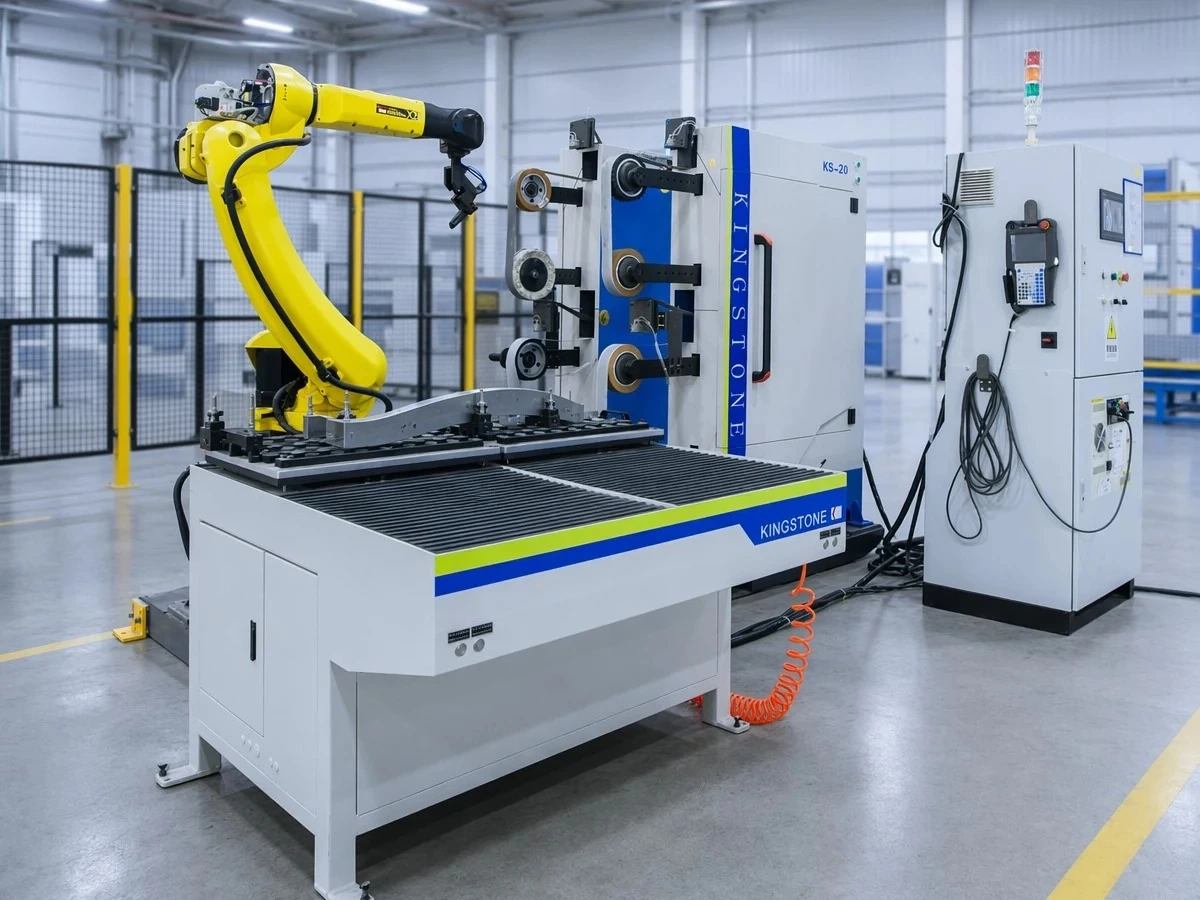
Geometry is usually the first decision point. Parts with compound curves, changing surface angles, deep transitions, or multiple faces require the finishing tool to maintain the correct orientation throughout the cycle. A robotic system can use coordinated multi-axis motion to reach these surfaces and follow a programmed path.
Examples include cast components, automotive trim, chair bases, and medical components. A CNC polishing machine is generally more suitable when geometry is consistent and dedicated workholding can support efficient multi-station production.
The practical test is simple: can every surface be reached with a stable tool angle and controlled contact using a repeatable machine path? If not, a robotic cell may offer the necessary freedom.
2. Compare Production Volume with Product Variety
High volume alone does not automatically determine the answer. Manufacturers should consider both annual quantity and the number of product variants.
A CNC polishing machine can be efficient when one part family runs for long periods. Multiple fixtures or heads can process several workpieces in parallel, reducing the effective cycle time per part. This makes the machine attractive for stable, repetitive production.
A robotic cell can be a better fit for high-mix production. Different programs can be stored for different workpieces, while changeable fixtures and tools support new variants. Physical changeover still takes time, but the same cell can often be adapted without replacing the entire automation platform.
Estimate the real production mix rather than relying only on the best-selling part. Include seasonal products, engineering changes, short batches, replacement models, and likely future components.
3. Define the Required Finish Before Selecting the Machine
“Polished” is not a complete specification. The project team should define the target result using measurable and visual criteria, including:
- Required surface roughness or Ra range
- Gloss or mirror-finish expectation
- Acceptable scratch direction and appearance
- Material removal requirement
- Areas that must not be polished
- Edge conditions and dimensional limits
- Inspection method and reject criteria
Both systems can deliver repeatable results when tooling, pressure, speed, abrasive sequence, and workholding are correctly engineered. Test real parts from different batches to reveal how part variation and fixture repeatability affect the finish.
4. Evaluate Changeover and Future Products
A polishing project should not be designed only for today's drawing. Ask how often models change, how many fixtures will be needed, and whether the machine must handle products that are still under development.
Robotic cells generally provide more reprogrammable motion. A new part may require a new fixture, path, and process parameters, but the robot and core cell infrastructure can remain in use. This is valuable when product lifecycles are short or customers request frequent design variations.
CNC polishing machines perform best when dedicated production efficiency is more important than broad flexibility. If a factory plans to run a narrow product family for several years, specialized workholding and simultaneous processing can justify the more focused configuration.
Include the cost and storage of fixtures, programming time, trial parts, operator training, and changeover downtime in the comparison.
5. Consider the Complete Process, Not Only the Motion Platform
The robot or CNC axes are only part of the system. Also assess:
- Abrasive and compound selection
- Contact-force and tool-wear control
- Fixtures and part positioning
- Dust, spark, and noise management
- Loading, guarding, and quality inspection
A robotic cell can combine rough grinding, fine grinding, polishing, and handling. A CNC machine may be more efficient when the process is standardized around a dedicated sequence and parallel workstations.
Review Kingstone's automated surface finishing solutions to compare integrated grinding, polishing, buffing, and deburring configurations.
6. Calculate Total Cost Around the Production Requirement
Purchase price is only one element of the decision. Compare the total cost of achieving the required output and quality over the expected service period.
Include engineering, fixtures, tooling, installation, training, maintenance, energy, consumables, floor space, and planned downtime. Then compare the operational benefits: labor reduction, higher throughput, lower rework, improved consistency, safer working conditions, and the ability to accept new products.
A CNC machine may create the strongest return when parallel processing delivers a low cost per part for a stable product. A robotic cell may create more value when one flexible system replaces several manual operations or supports a wider range of components.
Use your actual part mix and cycle-time target. A general claim about one technology being cheaper is not meaningful without the production data behind it.
Which System Should You Choose?
Choose a robotic polishing cell when:
- Parts have complex three-dimensional surfaces.
- The tool must approach the workpiece from many angles.
- You produce several models or expect frequent product changes.
- Grinding, polishing, deburring, or handling must be combined.
- Reprogrammability and long-term flexibility are priorities.
Choose a CNC polishing machine when:
- The part family and finishing path are stable.
- Production runs are long and repetitive.
- Several similar workpieces can be processed simultaneously.
- Dedicated fixtures and stations can maximize throughput.
- Low cycle time per part is more important than broad flexibility.
Some factories may benefit from both technologies. A CNC machine can serve a high-volume product family, while a robotic cell handles complex parts, variants, and shorter runs.
Information to Prepare for a Supplier Evaluation
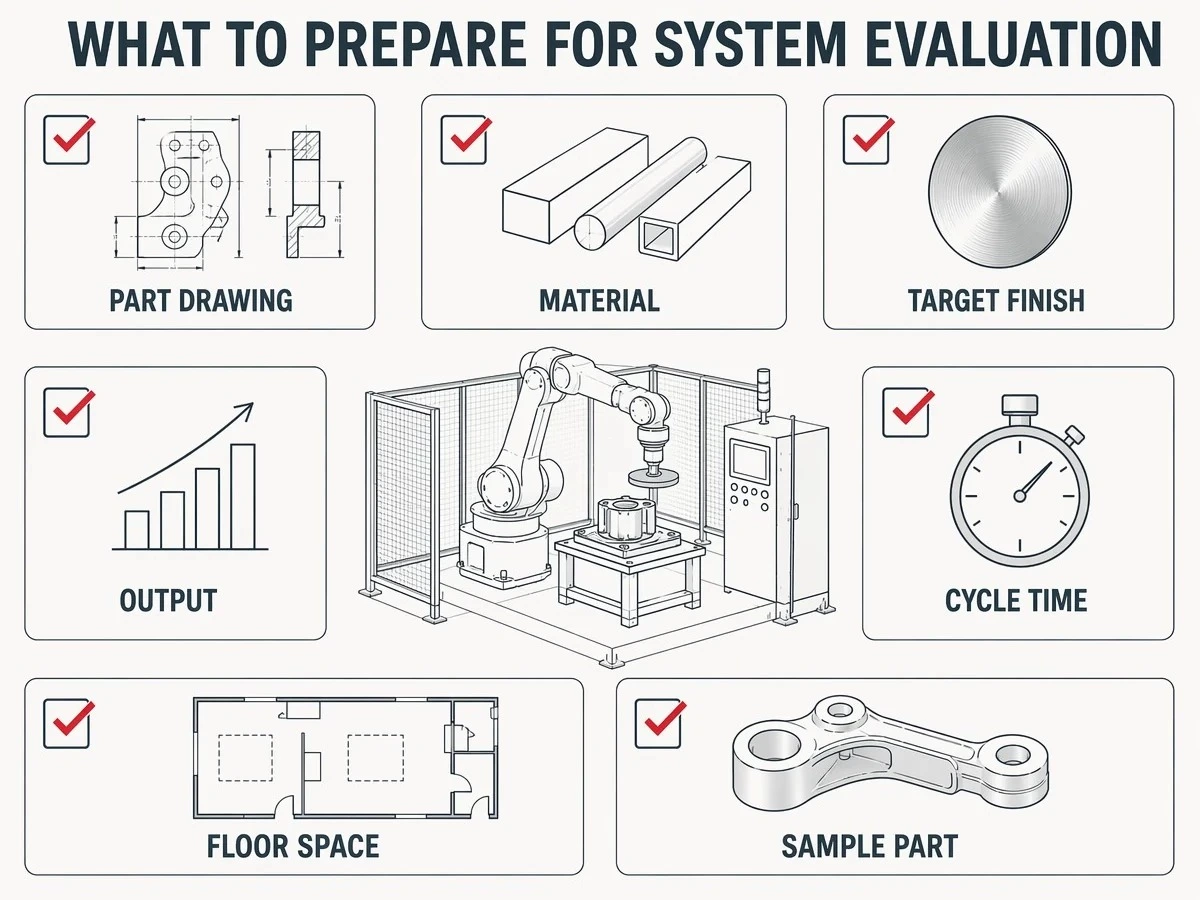
Before requesting a proposal, prepare the following:
- Part drawings, 3D files, photos, and physical samples
- Material and incoming surface condition
- Required finish, Ra value, gloss, or approved reference sample
- Current manual process and abrasive sequence
- Expected daily or annual output
- Number of models and changeover frequency
- Available floor space and loading method
- Dust, safety, and factory-environment requirements
- Target cycle time and quality-inspection method
- Future products the system may need to support
This information allows an integrator to compare robot reach, payload, tooling, station design, fixtures, and cycle-time balance against the real application.
Conclusion
The choice between a robotic polishing cell and a CNC polishing machine should be based on the workpiece and production strategy—not on the machine name. Robotic cells are usually the stronger choice for complex geometry, mixed production, and integrated multi-process finishing. CNC polishing machines are often the better choice for stable product families that benefit from dedicated, simultaneous processing.
Kingstone Robotics develops both robotic and CNC surface-finishing solutions. To receive a configuration recommendation, send your part drawing, photos, finish requirements, and production target. The engineering team can evaluate your process and propose a system around your actual workpieces.