English
 Español
How Robotic Polishing Improves Surface Preparation for Coating and Plating
For many metal parts, coating or plating quality is decided before the part enters the painting line, plating tank or anodizing process.
If scratches, burrs, casting marks, oxide layers or uneven roughness remain on the surface, the final finish will usually show the problem more clearly. A glossy coating, chrome layer or decorative finish does not hide surface defects. In many cases, it makes them easier to see.
This is why surface preparation is such an important step in manufacturing. Before painting, electroplating, powder coating or anodizing, the workpiece needs a surface condition that is clean, uniform and suitable for the next process.
Traditionally, this work has relied heavily on manual grinding and polishing. Skilled workers can handle many different shapes, but manual finishing is difficult to keep stable in batch production. Pressure, angle, polishing time and tool condition can vary from worker to worker and even from one shift to another.
For manufacturers that need consistent appearance, stable adhesion and lower rework rates, robotic polishing offers a more controlled way to prepare parts before coating and plating.
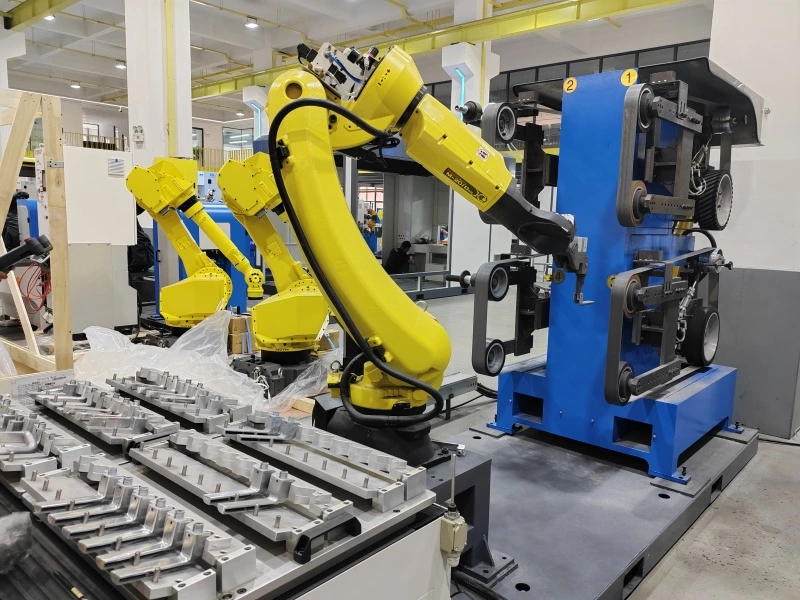
Why Surface Preparation Matters Before Coating and Plating
Coating and plating layers are usually thin. They can improve corrosion resistance, appearance and surface performance, but they cannot correct poor substrate preparation.
If the base surface has deep scratches, dents, burrs or uneven tool marks, those defects may remain visible after finishing. For decorative parts, this directly affects appearance. For functional parts, poor preparation may also affect coating adhesion, corrosion resistance and service life.
Surface roughness is another key factor. A surface that is too rough may cause uneven coating coverage or poor appearance. A surface that is too smooth in the wrong way may reduce mechanical bonding. What many production lines need is not simply a “shiny” surface, but a controlled and repeatable surface condition.
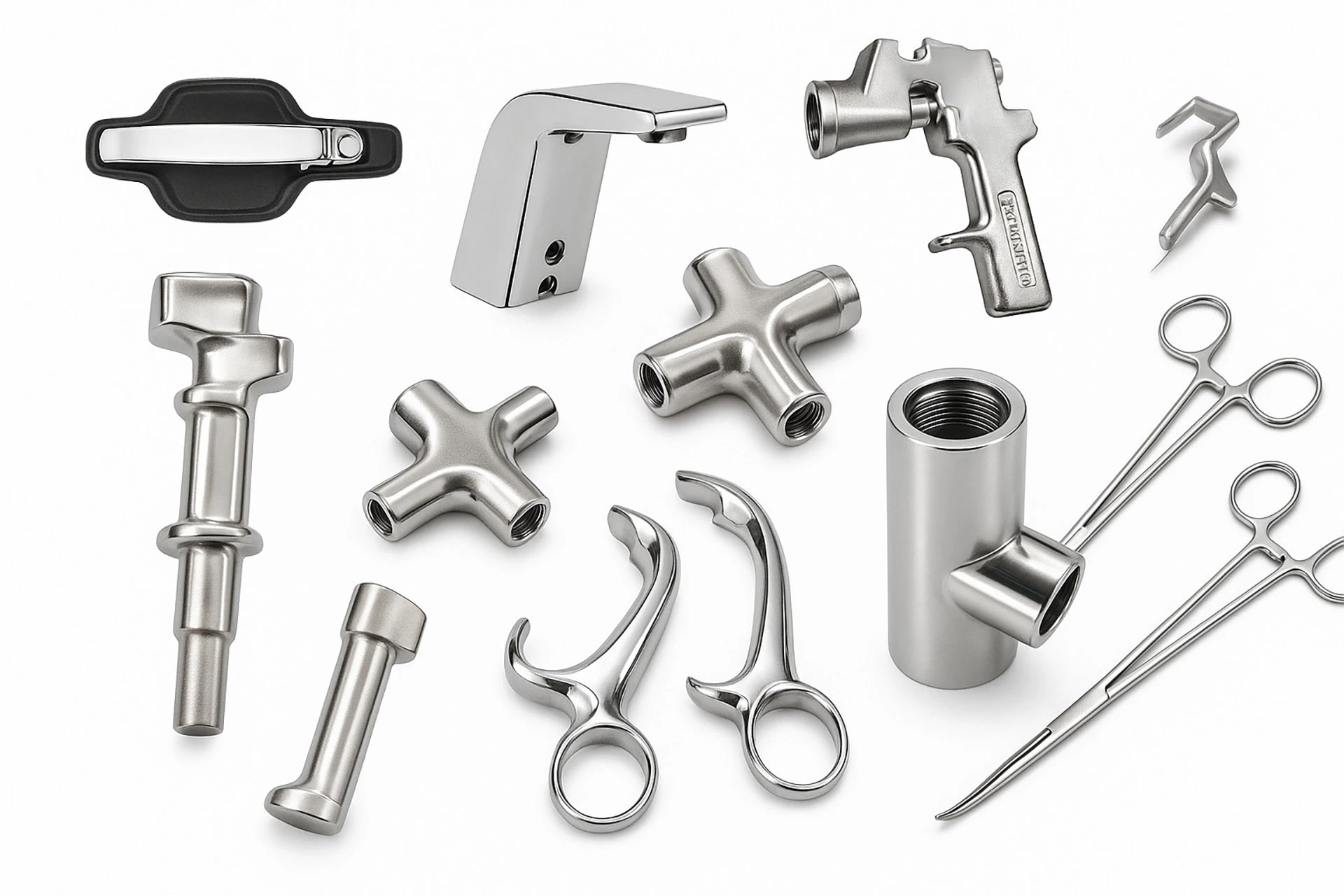
This is especially important for parts used in automotive components, bathroom hardware, aluminum die castings, stainless steel parts, medical devices, aerospace components and other products where both appearance and performance matter.
robot deburring and polishing automation in Batch Production
Manual polishing is flexible, but it is not always repeatable.
In daily production, operators need to control polishing pressure, tool angle, contact area and processing time by experience. When the workpiece has curves, edges, cavities or irregular casting surfaces, this becomes even more difficult.
Common problems include:
-
uneven material removal
-
over-polished edges or corners
-
remaining burrs or oxide layers
-
inconsistent surface texture between parts
-
new scratches caused by handling
-
unstable quality between different workers or shifts
These issues may not always be obvious immediately after polishing. However, once the part goes through painting, electroplating or anodizing, small surface differences can become visible defects such as uneven gloss, pitting, poor coverage, peeling, blistering or color variation.
For manufacturers, this means more inspection work, more rework, longer delivery time and higher operating cost.
How Robotic Polishing Creates a More Stable Surface
A robotic polishing machine does not replace manual polishing simply by moving a tool automatically. Its real value comes from process control.
A well-designed robotic polishing system can control the tool path, contact force, polishing angle, abrasive sequence, processing time and material removal more consistently than manual work. Once the process is tested and confirmed, the same parameters can be repeated part after part.
This is especially useful for production lines that need stable quality across large batches.
1. Stable Force Control Reduces Human Variability
One of the biggest differences between manual polishing and robotic polishing is force control.
In manual work, pressure changes naturally. Workers may apply more pressure when they are trying to remove a difficult defect, or less pressure when they become tired. Even small changes in force can affect material removal and surface roughness.
Robotic polishing systems can be equipped with force control devices, floating tools or servo-controlled polishing units. These systems help maintain a more stable contact between the abrasive tool and the workpiece surface.
When the polishing force is controlled, the process becomes more repeatable. The robot can remove burrs, machining marks or casting defects without unnecessarily changing the shape of the part.
For coating and plating preparation, this consistency is important because the next process needs a uniform surface foundation.
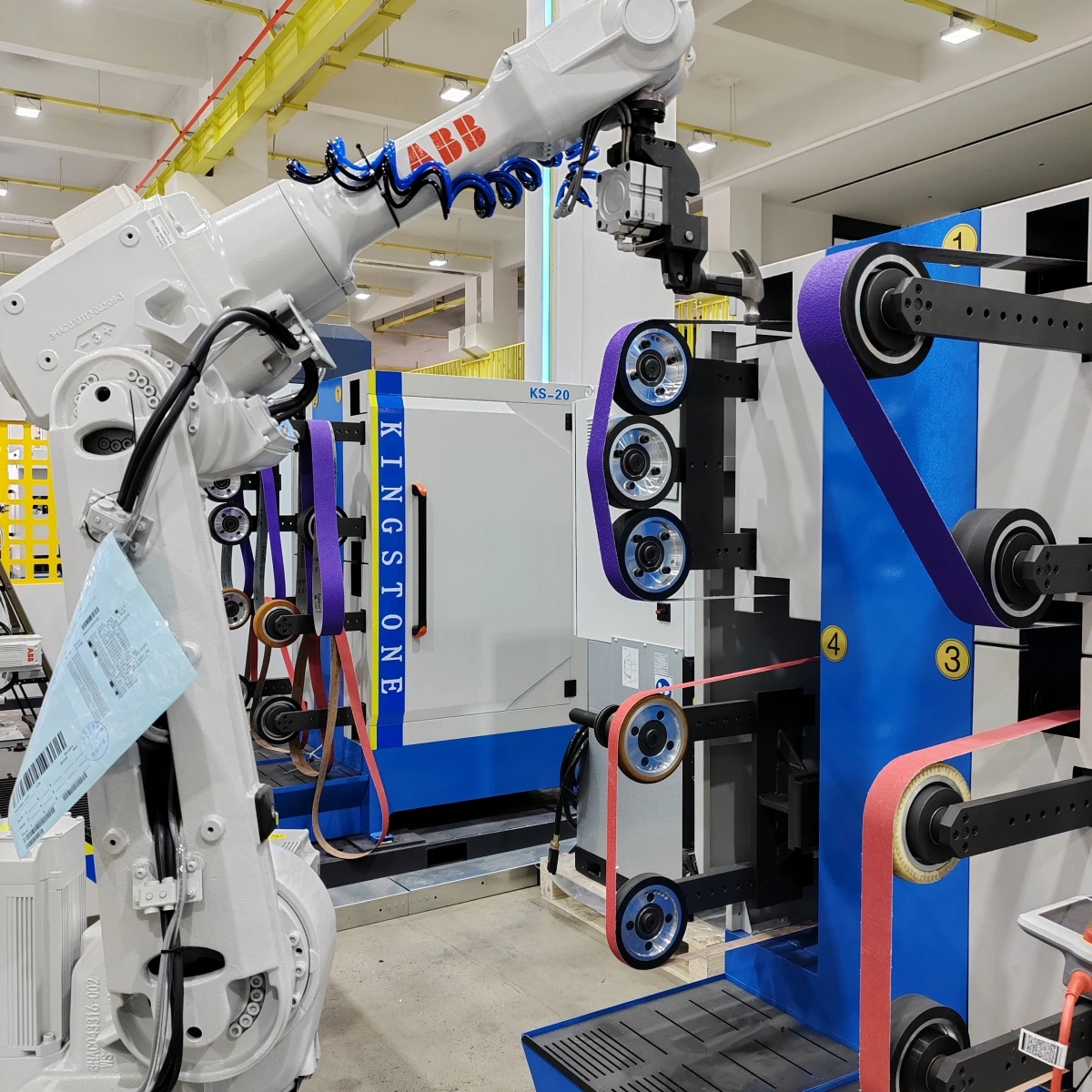
2. complex surface finishing applications
Many parts that need coating or plating are not simple flat plates. They may have edges, holes, curved surfaces, decorative lines, parting lines or functional mating surfaces.
During manual polishing, it is easy to round edges, flatten curved areas or remove too much material in one position. This may affect both the appearance and the assembly function of the part.
Robotic polishing can follow programmed paths according to the part geometry. With proper fixture design, tool selection and path planning, the robot can polish the required areas while reducing the risk of over-processing critical features.
For example, on aluminum die castings, faucet components, stainless steel parts or automotive components, the goal is often to remove surface defects while keeping the original design shape. Robotic polishing helps make this process more stable and controllable.
3. Consistent Surface Roughness Supports Better Adhesion
For coating and plating, the surface does not only need to look clean. It also needs the right surface condition for the next process.
Residual burrs, oxide layers, welding marks or machining marks can reduce coating quality. At the same time, an inconsistent surface texture may lead to uneven adhesion or visible differences after finishing.
A robotic polishing system can use different abrasive tools in sequence, such as abrasive belts, flap wheels, nylon wheels or polishing wheels. The process can move from rough grinding to fine polishing according to the required surface finish.
Because the robot follows a controlled path with repeatable parameters, it is easier to achieve a consistent surface texture across the whole batch. This helps provide a more reliable foundation for painting, electroplating, powder coating, anodizing and other downstream finishing processes.
4. Less Handling, Less Secondary Contamination
Cleanliness is another important part of surface preparation.
In a traditional manual process, parts may be repeatedly handled, turned over and moved between workstations. During this process, sweat, oil, dust or small particles may contaminate the surface. Minor scratches or dents may also occur during handling.
A robotic polishing workstation can reduce unnecessary manual contact. Depending on the production layout, the system can be integrated with fixtures, rotary tables, conveyors, loading and unloading units, dust collection systems and enclosed safety cells.
This helps create a cleaner and more controlled polishing environment. For parts that will later go through degreasing, activation, electroplating or painting, reducing contamination before the next process can help improve overall finishing stability.
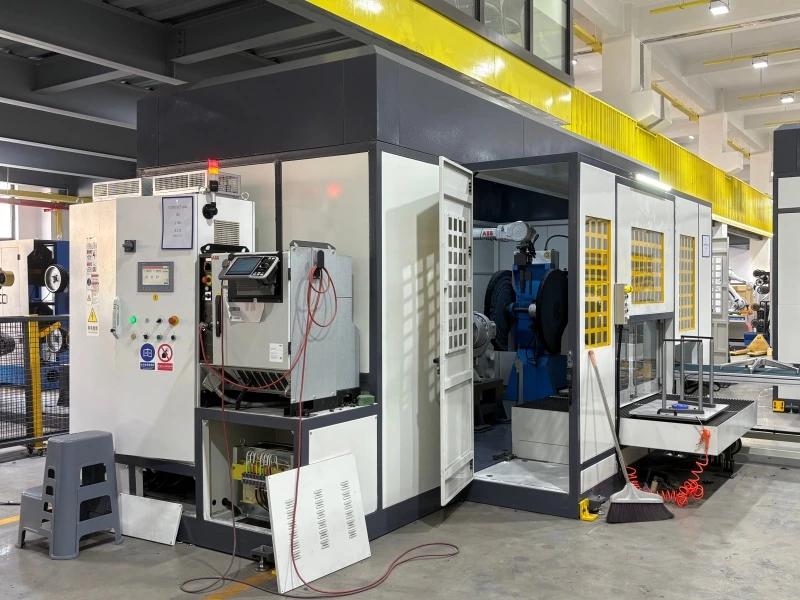
What Manufacturers Can Gain from Robotic Polishing
For many factories, the first reason to consider robotic polishing is labor reduction. But in real production, the value is broader than replacing manual work.
A properly designed robotic polishing system can help manufacturers:
-
improve surface consistency before coating or plating
-
reduce rework caused by visible surface defects
-
improve first-pass yield
-
reduce dependence on skilled manual polishers
-
improve worker safety by reducing dust, noise and repetitive labor
-
make polishing parameters more standardized and traceable
-
support more stable batch production
For high-volume parts, these improvements can have a direct impact on delivery, cost and quality control.
What Should Be Evaluated Before Choosing Robotic Polishing?
Robotic polishing is not a one-size-fits-all machine. The right solution depends on the workpiece and the required finish.
Before designing a system, manufacturers should evaluate:
-
workpiece material
-
part size and weight
-
surface defects that need to be removed
-
required surface roughness or final appearance
-
coating, plating or anodizing requirements
-
production volume and cycle time
-
fixture design
-
abrasive tool selection
-
loading and unloading method
-
dust collection and safety requirements
A reliable robotic polishing project should combine robot selection, tooling, fixture design, process testing and system integration. The robot is only one part of the solution. The polishing process itself is the key.
Conclusion
Coating and plating quality starts with surface preparation.
If the surface condition is unstable before painting, electroplating or anodizing, the final finish will also be difficult to control. Manual polishing can solve many problems in small-batch production, but it often becomes a bottleneck when manufacturers need stable quality, higher output and repeatable results.
Robotic polishing helps make the preparation process more controlled. By combining stable force control, repeatable tool paths, suitable abrasives, fixture design and dust management, manufacturers can achieve more consistent surfaces before downstream finishing.
For industries such as automotive parts, sanitary hardware, aluminum die casting, stainless steel products, medical devices and aerospace components, robotic polishing is becoming an important way to improve surface quality, reduce rework and build a more stable finishing process.
Kingstone Robotics designs customized robotic grinding, polishing, and deburring systems tailored to the customer’s parts, production process, and finishing requirements.
If you are looking for a more stable way to prepare parts before coating or plating, contact Kingstone Robotics. Our engineering team can help evaluate a suitable robotic polishing solution for your application.