English
 Español
Robotic Stainless Steel Mirror Polishing
Mirror polishing stainless steel manually is time-consuming, inconsistent, and heavily dependent on skilled workers. For manufacturers handling large production volumes or complex parts, maintaining stable surface quality is a constant challenge.
This is where robotic polishing systems are changing the game. By combining precision control, consistent force, and automated workflows, polishing robots make it possible to achieve high-quality mirror finishes at scale.
In this guide, we’ll break down how stainless steel mirror polishing works—and how robotic systems can significantly improve both quality and efficiency.
1. What Is a Mirror Finish on Stainless Steel?
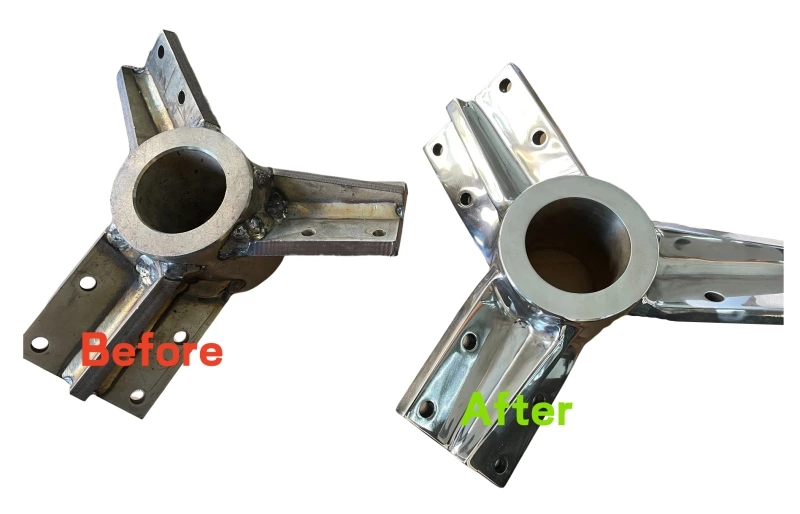
A mirror finish refers to an انتہائی smooth stainless steel surface with very low roughness and high reflectivity.
- Surface roughness: typically Ra ≤ 0.01 μm
- Gloss level: can exceed 800 GU
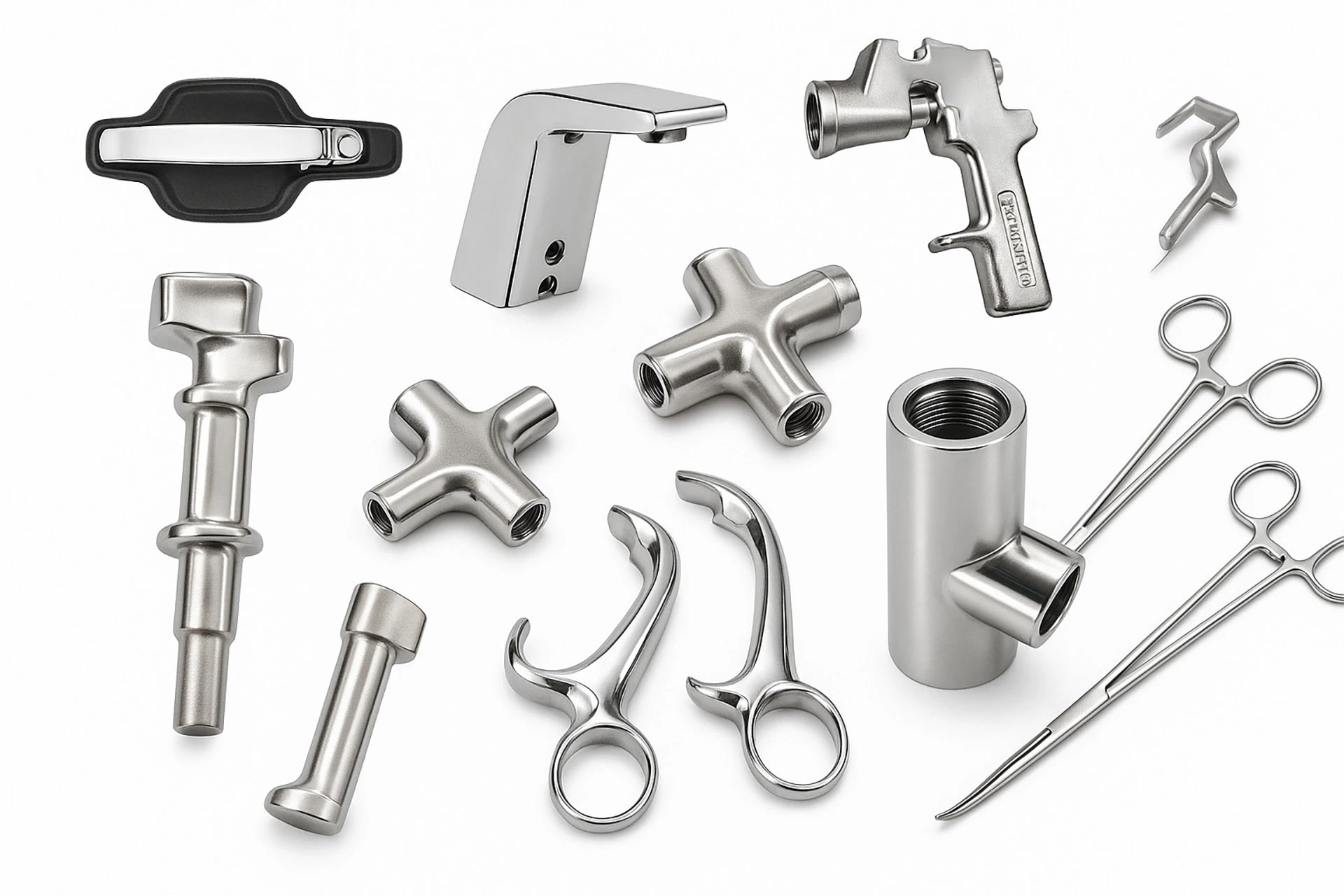
At this level, the surface reflects light uniformly, creating a clear, mirror-like appearance. This finish is widely required in industries such as:
- Kitchenware and appliances
- Sanitary and decorative hardware
- Medical equipment
- Automotive components
2. Why Traditional Polishing Falls Short
Manual polishing has been widely used, but it comes with several limitations:
- Inconsistent quality due to operator differences
- High labor costs and training requirements
- Difficulty handling complex geometries
- Low efficiency for large-scale production
For manufacturers aiming at high-end markets, these issues directly impact product quality and competitiveness.
3. How Robotic Polishing Works
Robotic polishing follows the same fundamental principle as manual polishing—gradually removing surface defects to reduce roughness—but with far greater precision and consistency.
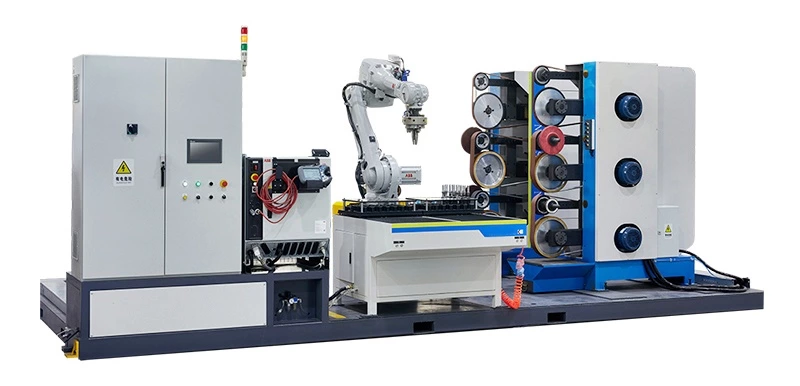
A complete robotic polishing system typically includes:
- Polishing robot (multi-axis)
- Polishing tools (cloth wheels, fiber wheels, wool wheels)
- Abrasives and polishing compounds
- Fixtures for stable positioning
- Inspection systems (roughness meter, gloss meter)
4. Step-by-Step Robotic Mirror Polishing Process
Step 1: Surface Preparation
Before polishing begins, the workpiece must be properly prepared:
- Remove burrs and weld seams
- Clean oil, dust, and contaminants
- Eliminate oxide layers
A clean and uniform starting surface is critical for achieving a flawless mirror finish.
Step 2: Rough Polishing
Purpose: Remove major defects and scratches
- Abrasive: coarse grit (e.g., 80–120)
- Speed: high
- Force: relatively strong
This stage creates a uniform base for further refinement.
Step 3: Intermediate Polishing
Purpose: Remove scratches from rough polishing
- Abrasive: medium grit (240–800)
- Reduced speed and pressure
- Cross-pattern polishing paths
At this stage, the surface becomes smoother and develops a soft sheen.
Step 4: Fine Polishing (Mirror Finishing)
Purpose: Achieve the final mirror effect
- Tools: soft cloth or wool wheels
- Abrasives: fine compounds or diamond paste
- Low pressure + precise control
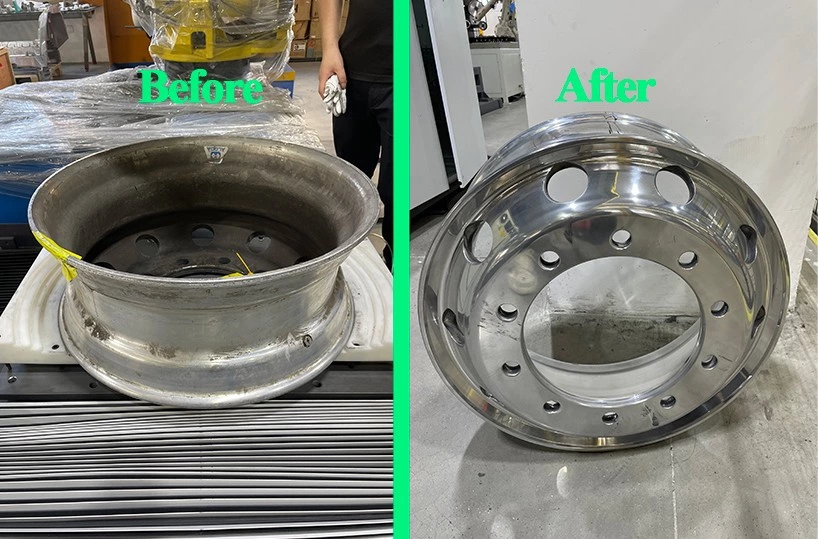
This step reduces surface roughness to Ra ≤ 0.01 μm, delivering a high-gloss mirror surface.
5. Key Advantages of Robotic Polishing
Compared with manual processes, robotic polishing offers clear benefits:
Consistent Quality
Precise control ensures uniform results across all parts.
Higher Efficiency
Robots can operate continuously, significantly increasing output.
Lower Labor Cost
Reduces dependence on skilled workers.
Adaptability
Handles complex shapes and hard-to-reach areas بسهولة.
Scalability
Ideal for mass production and standardized processes.
6. Tips for Achieving the Best Results
To maximize polishing quality, manufacturers should focus on:
- Proper selection of abrasives for each stage
- Accurate robot programming and path planning
- Stable force control during polishing
- Regular inspection of surface roughness and gloss
- Clean working environment to avoid contamination
7. Conclusion
Robotic polishing is rapidly becoming the preferred solution for stainless steel mirror finishing. It not only improves surface quality but also enhances production efficiency and reduces operational costs.
As automation technology continues to evolve, robotic systems will play an even greater role in high-precision surface finishing applications.
Looking for a reliable solution for stainless steel mirror polishing?
Kingstone Robotech provides customized robotic polishing systems designed for high efficiency, precision, and consistency.
👉 Contact us today to discuss your application and get a tailored solution.