English
 Español
How to Boost Robotic Polishing Line Capacity for Mass Production
If your factory manufactures auto parts, hardware tools, or home appliance components, you’ve likely grappled with the pain points of manual surface polishing: sky-high labor costs, inconsistent product quality, avoidable defects from human fatigue, and production lines that grind to a halt outside of 8-hour shifts.
The solution to scaling mass production and fixing these pain points? An optimized robotic polishing automation line. These lines run 24/7 with unwavering consistency, cut defect rates to near zero, and unlock maximum production capacity—if you design, operate, and optimize your automated polishing line the right way
In this post, we’ll break down the core components of a robotic polishing line, the must-have technologies to power it, actionable optimization strategies, and future trends shaping the industry. Whether you’re building a new line or upgrading an existing one, these insights will help you turn your automated setup into a high-efficiency production workhorse.
What Makes a Robotic Polishing Line Work? 4 Non-Negotiable Components
A fully automated robotic polishing line is a seamless, human-free system—parts go in raw, and come out polished and ready for the next stage. Every component plays a critical role, and a breakdown in one means a slowdown (or shutdown) for the whole line. Here’s the breakdown of the four core parts, with practical details for real-world factories:
✅ Feeding & Positioning: Eliminate Idle Robots and Misaligned Parts for Robotic Polishing Line
Manual feeding is a production killer: slow, physically taxing for workers, and prone to misalignment that ruins parts during polishing. Modern lines use a triple system of automatic feeders + conveyor belts + flexible fixtures to fix this—and it all boils down to two non-negotiables:
- Continuous feeding: Conveyors run 24/7, so robots never wait for parts. This alone boosts output from 1,000 parts/day (manual) to 3,000–5,000 parts/day (automated)—3x to 5x efficiency gains.
- Precision positioning: Industrial HD cameras detect part placement in real time, with a control unit adjusting fixtures to an error margin of just 0.02mm (1/50th the width of a human hair). Flexible fixtures adapt to any part size/shape, and switching parts takes just minutes (no need for new fixtures)—so production never stops for changeovers.
🤖 Robotic Polishing Core: The "Workhorse" of Your Mass Production Line
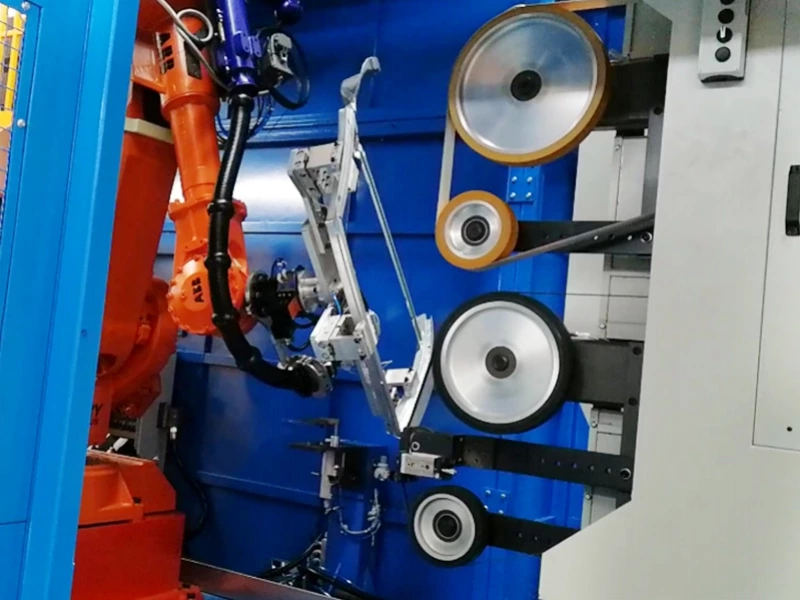
This is the beating heart of the system—and the biggest driver of production capacity. Forget the humanoid robots you see on TV; these are industrial mechanical arms built exclusively for polishing, with three key traits to look for when selecting equipment:
- Flexibility: Grinds every nook and cranny, even for curved or irregularly shaped parts.
- Precision: Movements are identical every time, eliminating uneven polishing (top models like ABB 2600/4600 series hit an error margin under 0.01mm).
- Durability: Runs 24/7 for days without breakdowns—no coffee breaks, no fatigue, no downtime.
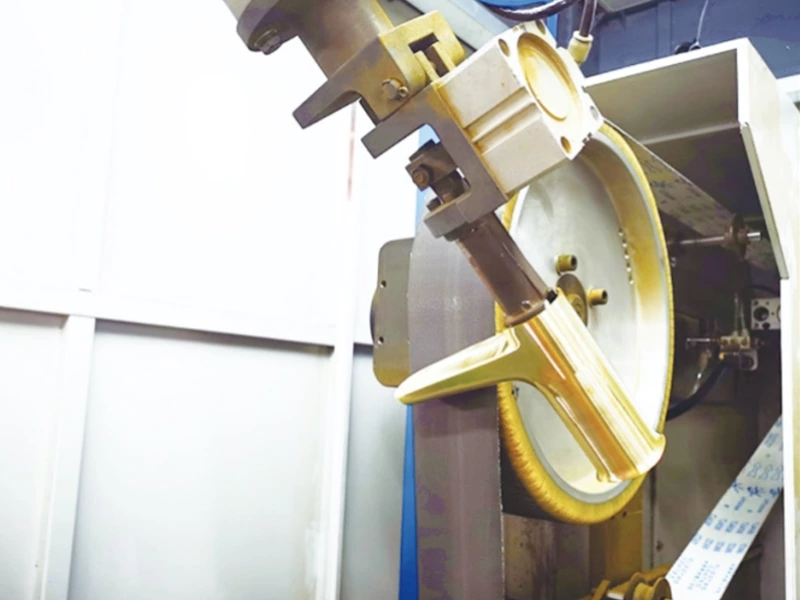
Polishing tools matter just as much as the robots. Modular wheels and belts handle rough → fine → precision grinding in one step (no manual tool switching), and systems like Hua Hang Weishi’s dual-head belt machines cut processing time by eliminating the need to transfer parts between machines.
✅ Detection & Feedback: Stop Defective Batches in Their Tracks
Nothing kills production efficiency like a batch of defective parts—they waste materials, delay shipping, and force costly reworks. Automated inspection eliminates this risk with two complementary methods, both synced to the line to avoid slowdowns:
- Real-time online inspection: HD cameras and specialized gear check parts immediately after polishing (1–2 parts/second) for scratches, dents, or uneven surfaces. Defective parts are automatically sent to a robotic rework station; qualified parts move forward—no extra time added to the line.
- Offline sampling inspection: Periodic batch sampling with professional testing equipment ensures consistent quality across mass production. If issues are found, the system instantly adjusts polishing parameters—so the same defect never happens twice.
📦 Discharge & Storage: Keep the Line Flowing, No Overstock/Stockouts
Polished parts need a seamless handoff to storage—and smart material handling prevents bottlenecks here, too. Robotic conveyors move qualified parts directly to the warehouse, sorting and stacking them by specification (no manual handling = no damage).
The cherry on top? A smart warehouse system with real-time inventory tracking. Managers see exact stock levels and demand at a glance, optimizing production schedules to avoid two common pitfalls: line shutdowns from overstock, or shipping delays from understock.
A quick note on control systems: All four components are synced by a central control system (the "brain" of the line). Top systems like Keston’s feature intuitive color interfaces for real-time parameter adjustments and remote troubleshooting—so the line never shuts down for avoidable reasons.

4 Core Technologies to Unlock Maximum Production Capacity
A well-designed line is only as good as the technology powering it. These four technologies are non-negotiable for saving time, reducing errors, and pushing your line’s capacity to its limit—they’re the difference between a "good" automated line and a great one.
🛣️ Path Planning & Trajectory Optimization: Polish Faster, No Redundant Moves for Robotic Polishing Line
Old-school "teaching programming" (demonstrating grinding steps to robots on the line) is slow and clunky—especially when switching to new parts. Offline programming changes everything:
- Design part geometries and polishing paths on a computer (no line downtime for training).
- Transmit programmed instructions to robots, with real-time debugging for complex parts (Hua Hang Weishi’s dedicated software does this in minutes).
Trajectory optimization takes it a step further: it eliminates redundant robot movements, cutting polishing time by 20–30%. Flat parts get straight, uniform grinding paths; curved parts get one-time shaping paths—so your robot polishes 1,200–1,300 parts/day instead of 1,000, with zero quality loss.
🔍 Intelligent Sensing & Adaptive Control: Perfect Automated Polishing, Even for Imperfect Parts
No two mass-produced parts are exactly the same—some are slightly larger/smaller, and polishing tools wear out over time. Fixed polishing parameters lead to inconsistent quality and defects; intelligent sensing + adaptive control fix this by turning robots into "thinking" machines:
- Sensing: Force sensors track polishing pressure, visual sensors monitor tool wear, temperature sensors prevent part deformation from overheating (the robot’s "eyes" and "hands").
- Adaptive control: The system automatically adjusts parameters in real time. Worn tools trigger higher grinding intensity; oversized parts get modified paths. Koston’s robots even select optimal parameters based on part material/requirements—no manual worker adjustments needed.
🤝 Multi-Robot Collaboration for Polishing Line Efficiency & Parallel Processing: Double (or 5x!) Your Output
A single robot can only handle so much—if you’re grinding tens of thousands of parts/day, multi-robot collaboration is a must. Robots divide tasks (rough grinding, fine grinding, precision grinding) and work in sync under a unified control system—no task competition, no idle time. The result? A 5x output boost (1,000 parts/day/robot → 5,000 parts/day for 5 robots) with no extra labor costs.
Parallel processing amplifies this efficiency: one robot polishes a part while another secures the next; polishing and inspection happen simultaneously. No waiting, no stacking parts for later checks—just continuous, non-stop production.
📊 Digital Control & Big Data Analysis: Optimize the Robotic Polishing Line, Non-Stop
To keep capacity at its peak always, you need to fix bottlenecks before they cause downtime. Digital control + big data analysis turn your production line into a data-driven system:
- Digital control: Every metric is recorded in real time—robot run time, part polishing duration, pass rates, equipment failure status. Managers monitor production from anywhere, at any time.
- Big data analysis: The system crunches the numbers to find bottlenecks: Which process has too much waiting time? Which robot is slow? Which equipment breaks down most often?
Fixes are simple and iterative: shorten conveyor distances for slow processes, optimize parameters for slow robots, and you know schedule preventive maintenance for faulty equipment. Over time, these small changes add up to a continuously improving, higher-capacity line.
4 Actionable Strategies to Optimize Robotic Polishing Line Capacity: Take Capacity to the Next Level
You’ve got the line, you’ve got the technology—now it’s time to fine-tune for maximum output. These four strategies are 100% practical for every factory: whether you’re running an existing automated line or building a new one, they eliminate waste and ensure every minute of production counts.
📐 Optimize Production Line Layout: Cut Distance, Cut Waiting Time
A messy layout is a hidden capacity killer—long part transportation distances and inter-process waiting time eat into output. The fix is simple: cluster processes to minimize movement with a U-shaped or linear layout. Place feeding/positioning right next to polishing, and polishing right next to inspection—this slashes handling time and keeps the line flowing seamlessly. No expensive overhauls needed; just a small reconfiguration of existing equipment.
🔧 Optimize the Polishing Process: Faster Grinding, Zero Scrap
The goal here is to minimize polishing time per part, without sacrificing quality. Two steps to get this right:
- Match tools/parameters to material: Use high-hardness wheels for fast metal grinding; soft wheels for plastic parts (to prevent damage). Adjust wheel speed for the perfect balance of speed and finish.
- Stick to a 3-stage grinding sequence: Rough grind (60–70% of total time) uses high speed/force to remove burrs/scratches; fine/precision grind uses low speed/force for a smooth finish. No redundant grinding, no wasted time—just fast, perfect polishing every time.
⚙️ Strengthen Equipment Maintenance: Prevent Downtime, Keep It Running
Automated lines live and die by 24/7 continuous operation—even a 1-hour breakdown can tank daily output. Maintenance’s core rule: preventive care + rapid response. Here’s how to implement it:
- Preventive maintenance: Lubricate robot joints on a schedule, replace polishing tools before they wear out, and calibrate inspection equipment regularly. Koston’s polishing workstations even include dust removal systems and cabinet AC to reduce failure risk and extend equipment life.
- Predictive maintenance: Use big data to monitor robot current/temperature—anomalies trigger pre-emptive repairs, so small issues don’t become big shutdowns.
- Rapid response team: Train professional maintenance staff to fix common issues (robot jams, broken tools) in minutes. Partner with brands like Elite Robots (3-year core component warranty + dedicated repair teams) for emergency support—minimize downtime at all costs.
👨💼 Optimize Personnel Management: Train for Speed, Incentivize for Efficiency
Automation eliminates manual polishing—but you still need skilled workers to operate, maintain, and manage the line. The key is to turn your team into line efficiency experts:
- Train for self-sufficiency: Teach operators to handle basic robot operation, parameter adjustments, and minor troubleshooting. If a robot jams, they fix it on the spot—no waiting for maintenance staff, no prolonged downtime.
- Incentivize performance: Link compensation to production metrics—daily output, product pass rate, equipment uptime. Outstanding performance gets rewards, and your team will be motivated to keep the line running at peak capacity.
Future Trends: Robotic Polishing Lines Are Getting Smarter & More Flexible
Technology is evolving fast, and robotic polishing lines are no exception. These four trends will shape the industry in the next few years—and adopting them early will keep your factory ahead of the competition:
- Superior intelligence: Robots with self-learning/self-optimization capabilities—they’ll derive the perfect polishing paths/parameters by grinding thousands of parts, no manual programming needed. Even for new, unprocessed parts, they’ll adapt in real time.
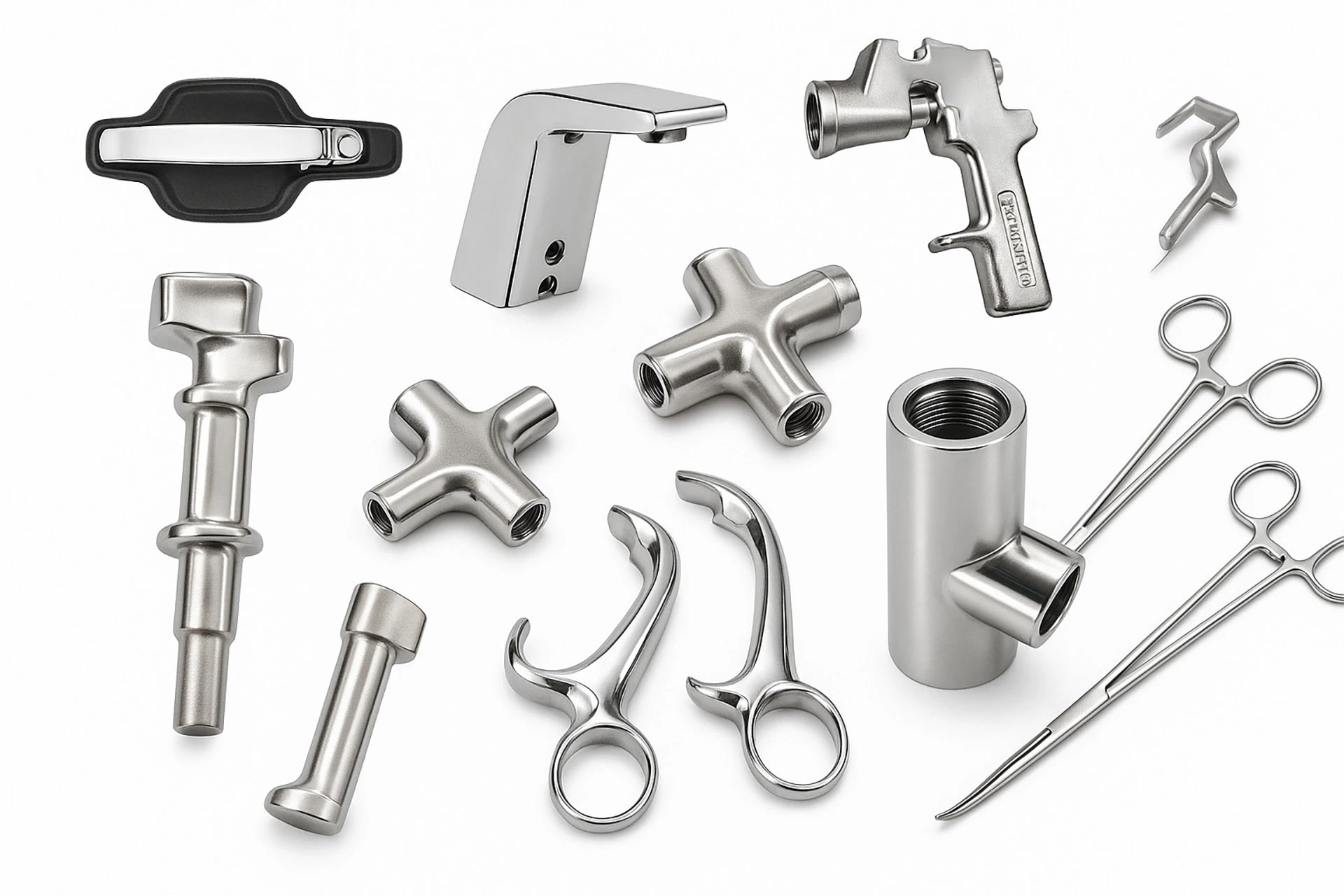
- Ultimate flexibility: Lines that switch between part types in minutes—polish auto parts today, metal hardware tomorrow, home appliance components the next day. No need to rebuild the line; just a few quick adjustments—perfect for multi-variety, batch manufacturing.
- Full digitalization with digital twins: Virtual replicas of your physical production line, built on computer simulations. Test layout changes, parameter optimizations, and new part processes in the virtual world—no trial-and-error on the real line, saving time and money. IoT technology will also let you monitor/control the line remotely, from anywhere in the world.
- Seamless integration with the entire factory: Robotic polishing lines will sync with other automated systems (assembly, packaging, shipping) to create a fully connected smart factory—every process talks to the next, and production capacity is optimized across the board.
Wrapping Up
A robotic polishing automation line isn’t just a piece of equipment—it’s a game-changer for mass production, turning labor-intensive, error-prone manual work into 24/7, consistent, high-capacity output. The secret to maximizing its potential? Start with the four core components, power it with the right technologies, optimize relentlessly with practical strategies, and stay ahead of future industry trends.
If you’re still struggling with a specific pain point—feeding inefficiency, frequent defects, or bottlenecks in multi-robot collaboration—drop a comment below or send us an inquiry. We’ll share targeted tips to fix it and unlock your line’s full production capacity.
Here’s to building a faster, more efficient, higher-capacity robotic polishing line—one that grows with your factory’s mass production goals!