English
 Español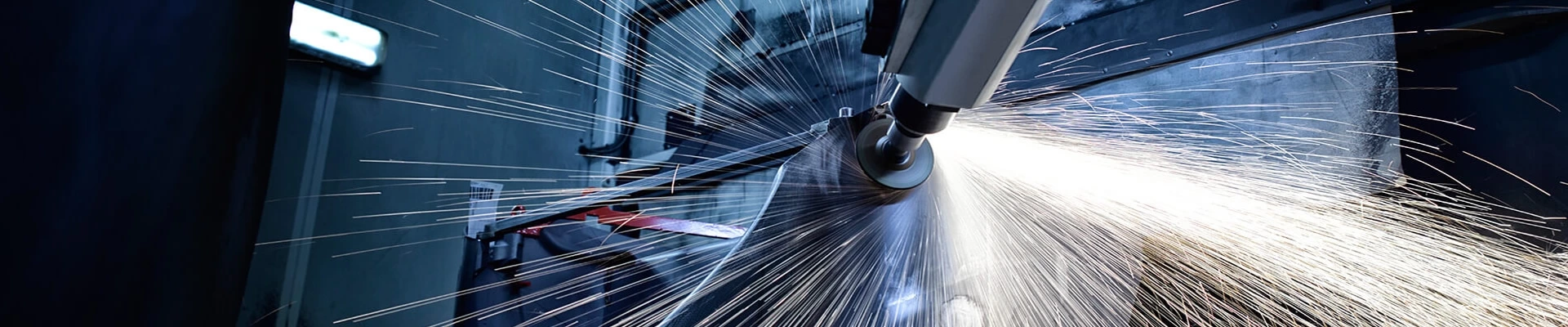
Robotic Grinding and Polishing for High-Mix Production: Managing Part Changeovers
High-mix production means running several product models in planned batches, often with different shapes, sizes or finishing requirements. For manufacturers considering robotic grinding and polishing, a common question is whether one cell can support that variety without spending too much time on setup.
A robotic grinding and polishing system can be designed for multiple compatible models. The practical result depends on the fixtures, abrasive stations, robot programs and checks required between batches. Planning these changeovers early helps define which products belong in the cell and how production should be organized.
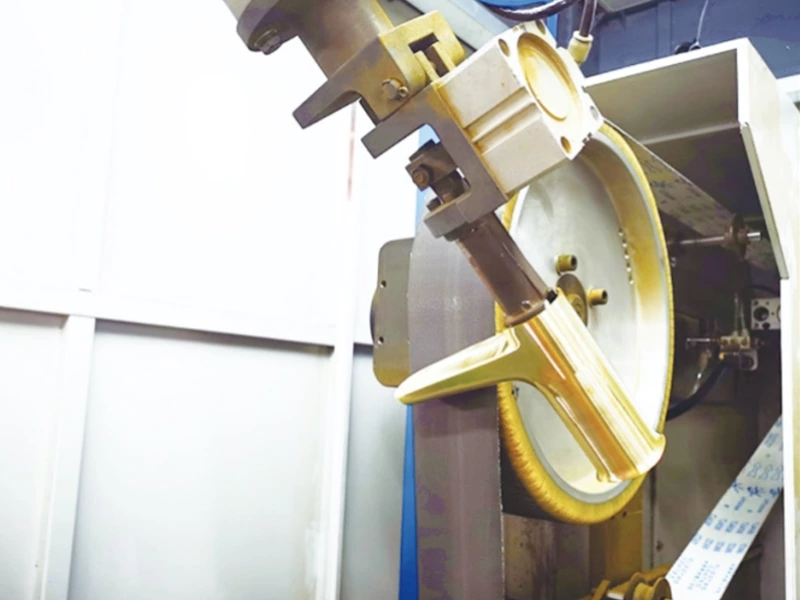
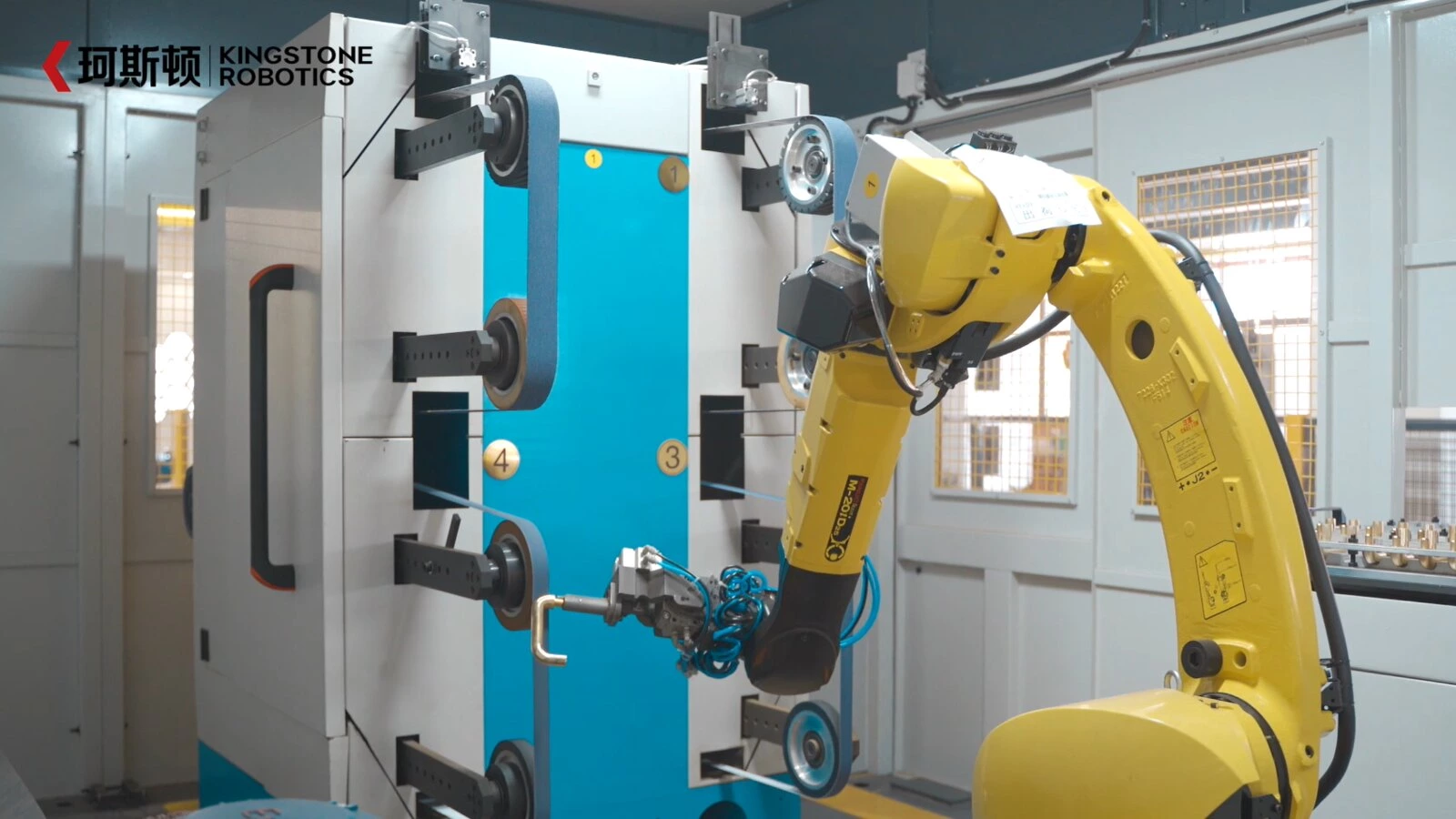
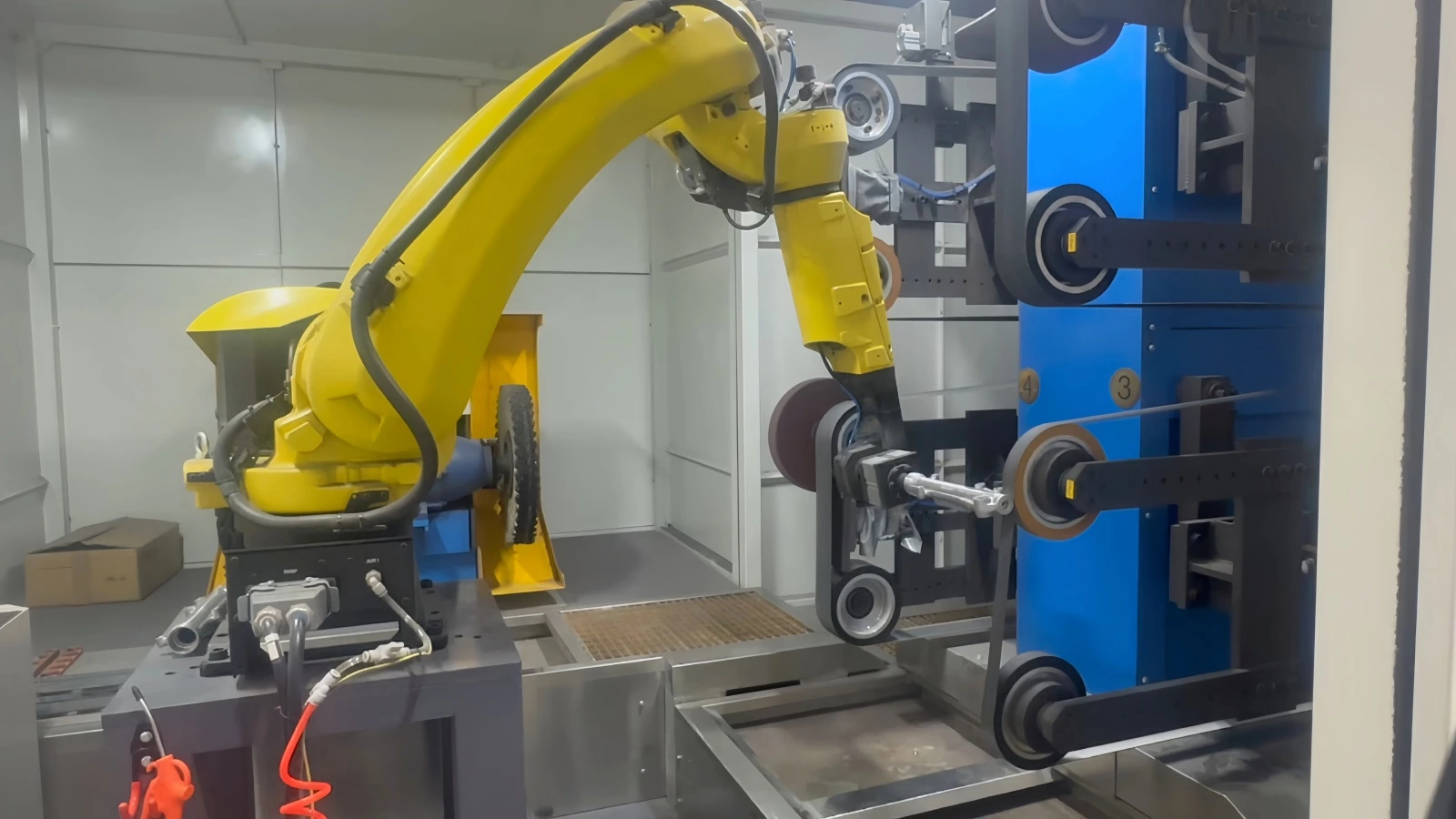
Noted: This video shows a robotic finishing cell in operation. Support for different part models depends on the fixtures, tools, programs and changeover procedures specified for the project.
Which Part Models Can Share a Robotic Finishing Cell?
Begin with a product family: parts that share enough processing requirements to use a common equipment platform. Similar appearance alone does not establish compatibility.
For example, several handle models may use a similar grinding sequence while needing different gripping inserts and robot paths. A component requiring heavy stock removal and another requiring delicate cosmetic finishing may place very different demands on the equipment.
Review the proposed models together:
| Item to compare | What to establish |
|---|---|
| Material and incoming condition | Whether the tools and process can accommodate each material and its normal variation |
| Size, weight and center of gravity | Whether the robot, gripper and loading arrangement suit every proposed model |
| Locating and gripping features | Which fixture elements can be shared and which require replacement |
| Processing surfaces | Whether tools can reach the required areas throughout each path |
| Required finish | Which abrasive stages and inspection criteria each model needs |
| Batch size and production frequency | How often changeovers will interrupt production |
Also check the robot’s wrist load limits, tool clearances and maintenance access. A model that fits inside the enclosure may still be unsuitable for the intended processing arrangement.
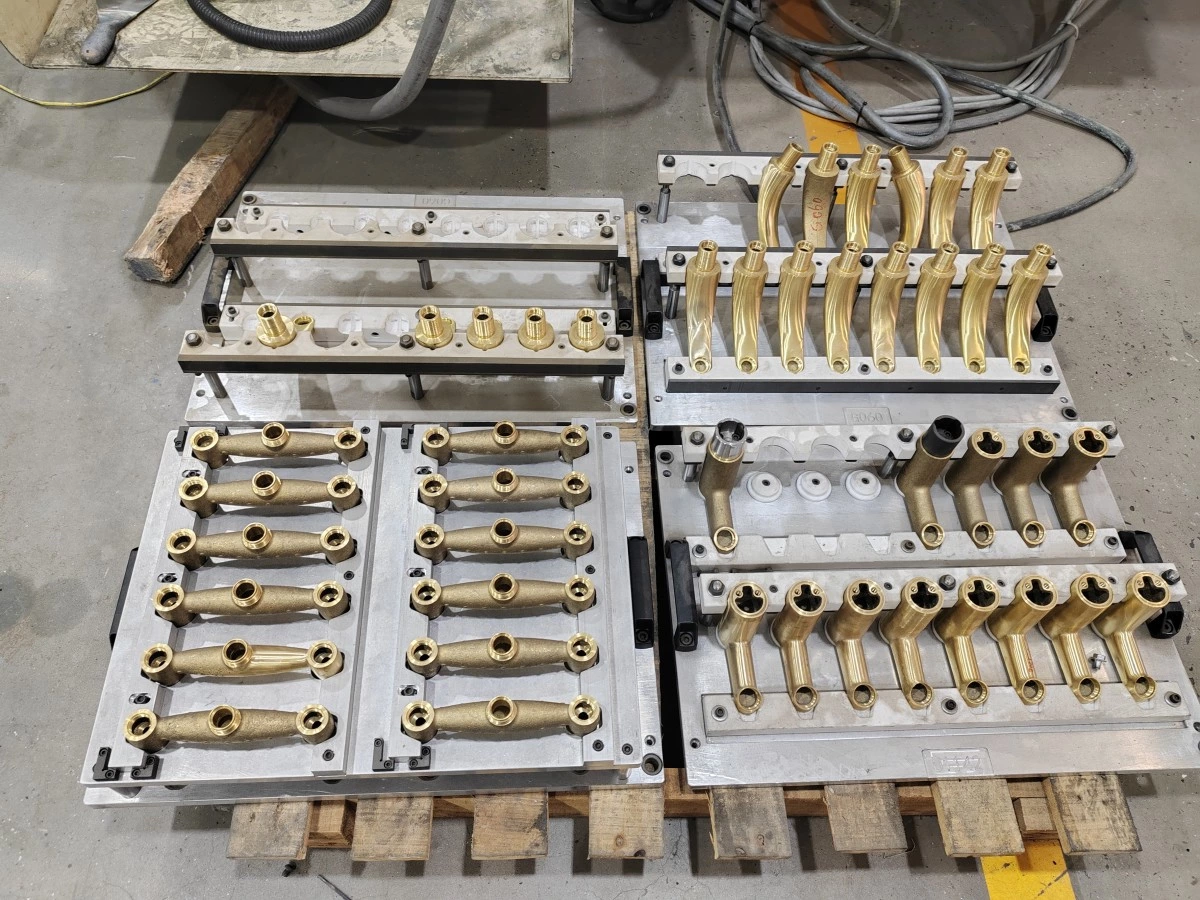
Noted: Part models should be compared for workholding, tool access and finishing requirements before sharing a cell
Make Fixtures and Grippers Repeatable to Change
A practical fixture change should return the next workpiece to a known position without repeated manual adjustment.
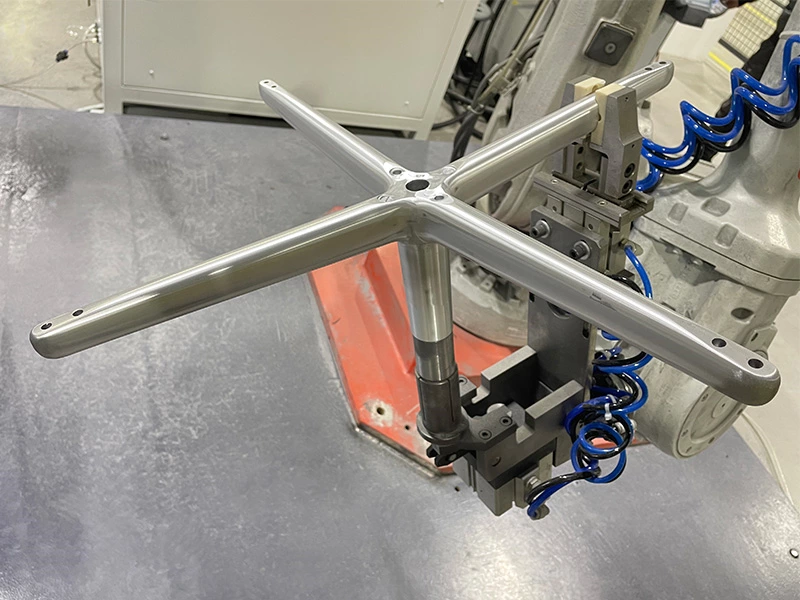
Depending on the product family, the design may use replaceable nests, dedicated gripping jaws or complete fixture assemblies mounted to a common base. Each arrangement needs suitable locating features, support against processing forces and clear identification.
After a fixture is removed and installed again, it must still locate the part consistently. Dust on contact surfaces, worn inserts or an incorrectly seated fixture can change the relationship between the workpiece and the programmed path.
Include cleaning, inspection and fixture identification in the changeover instructions. Where suitable, mechanical locating features or identification sensors can help prevent the wrong setup from being used.
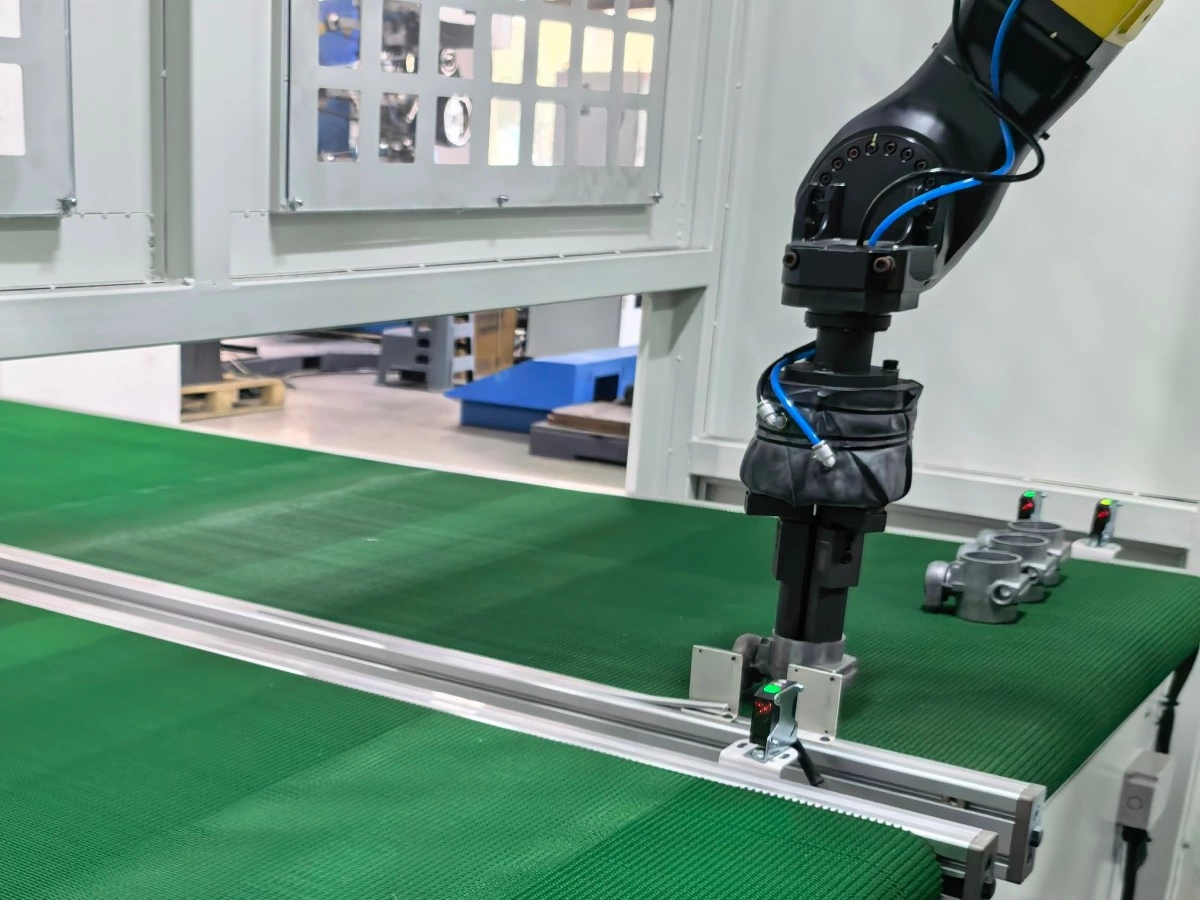 Noted: Each fixture setup must locate and support the workpiece consistently after a changeover.
Our guide to fixture design for robotic grinding and polishing explains the workholding requirements in more detail.
Match Each Model to Its Tools and Process Recipe
A part recipe should identify the validated setup for a specific model. It may reference the robot program, fixture, abrasive sequence, processing parameters and inspection requirements.
Useful information includes:
- Part number and drawing revision.
- Fixture or gripper identification.
- Robot program and approved version.
- Abrasive type, grade and assigned station.
- Relevant speed, force and compensation settings, where applicable.
- Acceptance criteria and first-part inspection points.
The control system should make the selected model clear to the operator. Barcode selection or fixture recognition can be considered when needed, but these features must be specified as part of the project.
Abrasive compatibility also needs review. Two models may share a robot while requiring different belts, polishing wheels or compounds. Some material combinations require dedicated consumables or additional cleaning to control contamination.
Changing a recipe does not make an unsuitable abrasive appropriate. Confirm which tools remain installed, which are exchanged and how their condition is checked before restarting.
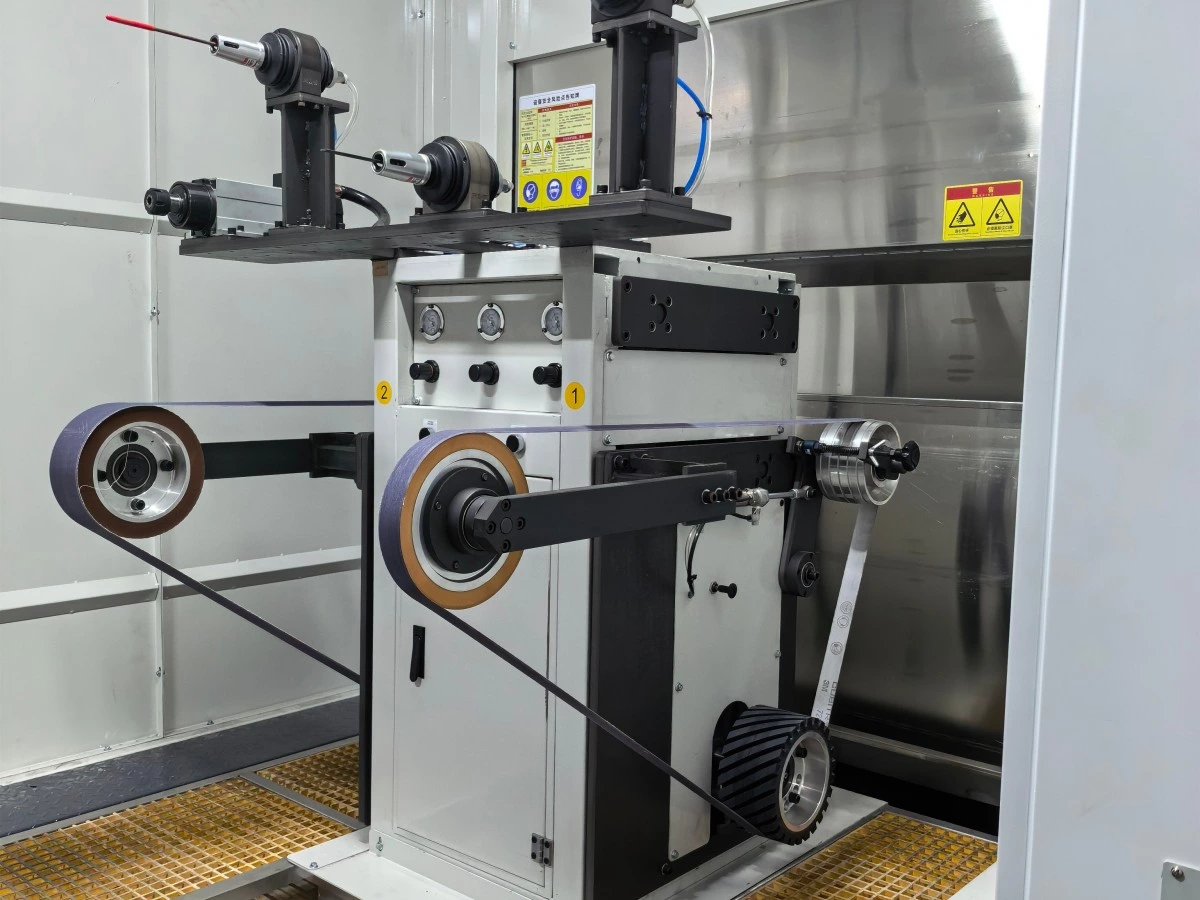 Noted: Each part model needs a defined abrasive sequence and a verified tool setup.
Define the Complete Changeover Procedure
Measure a changeover from the last accepted part of the outgoing batch to the first accepted part of the incoming batch under the agreed production procedure. This captures more than the time needed to select a program.
A typical sequence includes:
- Complete the outgoing batch and identify any remaining workpieces.
- Put the cell into the required safe setup condition.
- Clean and exchange the specified fixture, gripper or locating inserts.
- Install or confirm the required abrasives and processing tools.
- Select the approved part recipe and verify the fixture, part and program match.
- Perform the prescribed restart checks and process the first part.
- Inspect that part and release the batch when the requirements are met.
Program proving and production restart should follow the cell’s approved procedures. The required checks depend on whether the setup is already validated or includes a new program, tool or fixture.
Record the actual changeover time and any adjustments. Repeatedly correcting the fixture position or editing paths during routine setup indicates that the changeover method needs further development.
Plan Batch Sizes Around Setup Time
Processing time alone does not show how a cell will perform in high-mix production. Frequent setup interruptions can occupy a substantial share of the available shift.
For illustration, a 20-minute changeover contributes two minutes per part to a batch of ten, compared with 12 seconds per part to a batch of 100. These figures describe setup allocation; grinding and polishing time must be considered separately.
Where delivery requirements allow, scheduling compatible models together may reduce repeated tool exchanges and cleaning. However, larger batches also increase work in progress, so the schedule should reflect actual demand.
Compare production plans using accepted parts per shift, changeover frequency, consumable replacement and remaining manual work. For cells with overlapping stations, check the interval between completed parts rather than simply adding every task duration.
Validate Both the Models and the Changeovers
A successful run on one model provides evidence for that model and setup. Other products in the family still require an agreed level of validation.
Test representative incoming parts and inspect the surfaces, edges and dimensions relevant to each model. Record the fixture, program version, abrasive condition and any operator intervention.
The trial should also include changing from one validated model to another and then returning to the first. This helps establish whether the original setup can be restored without extensive readjustment.
Review:
- Surface quality and dimensional acceptance for each model.
- Repeatable positioning after fixture removal and reinstallation.
- Tool access and clearances across the required paths.
- The complete changeover time, including first-part approval.
- Output under the intended batch schedule.
- Any manual finishing or inspection that remains necessary.
Our robotic polishing sample testing guide describes how to prepare samples and agree acceptance criteria.
Plan for Future Products Before Finalizing the Cell
Provide the proposed product range during the initial equipment review. Designing around one convenient sample can leave too little space, tool access or gripping capacity for other models.
Identify current products separately from possible future additions. Agree which models are included in the initial scope and what information will be needed to evaluate a new one.
Future products may require additional fixtures, abrasives, programs or processing stations. Even when the existing hardware is suitable, engineering and validation work should be allowed for.
The intended batch sizes and changeover frequency should also be part of the specification. A suitable cell concept must support the production mix as well as the finish required on individual parts.
Discuss Your Product Range with Kingstone Robotics
Kingstone Robotics develops customized robotic grinding, polishing and deburring systems around customer workpieces and production requirements.
For a multiple-model project, send drawings or photos of the proposed parts, material details, workpiece weights, target finishes and expected batch sizes. Mark the processing areas and any surfaces that must be protected.
This information provides a starting point for reviewing shared equipment, model-specific tooling and the testing needed for each product.
Discuss Your Part Models with Kingstone Robotics
Email: kingstonerobot@chinamakeco.com
WhatsApp: +86 15159875082
Frequently Asked Questions
Can one robotic polishing cell process different product models?
Yes, when the models are compatible with the cell’s robot, workholding, tools and processing range. Each model needs a suitable setup and validation. The number of supported models depends on the application.
Does every model need a separate fixture?
Some related models can share a fixture base with replaceable inserts or jaws. Others need dedicated fixtures. The choice depends on locating features, rigidity, surface protection and tool access.
How long does a robotic polishing changeover take?
There is no universal time. It depends on fixture and tool exchanges, cleaning, recipe selection and first-part inspection. Define the measurement boundaries and confirm the time using the intended production procedure.
Can a new product be added by changing only the robot program?
Sometimes, if the existing hardware and process are suitable. A new product may also require different workholding, abrasives or loading equipment. Tool access, clearances and finishing results must be checked.
Is robotic grinding and polishing suitable for small batches?
It can be suitable when setup effort, programming work and production demand justify the equipment. Review the expected product mix and changeover frequency alongside the processing time for each part.
Can the same cell process different metals?
It may be possible, subject to equipment and process compatibility. Material changes can affect abrasive selection, contamination control, cleaning and dust handling. These requirements should be evaluated before sharing the cell.