English
 Español
How to Estimate Robotic Deburring Cycle Time for Die Castings
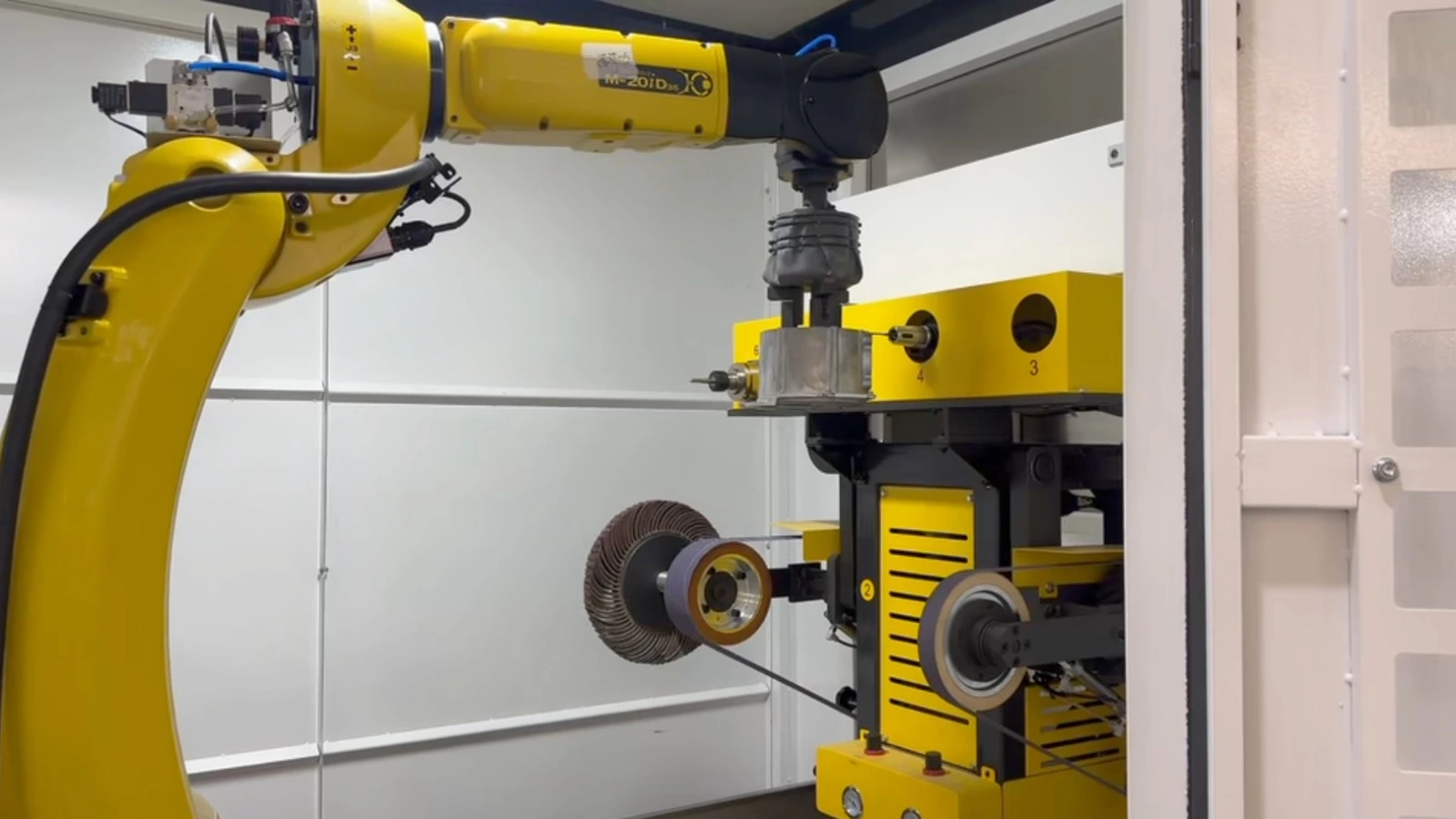
Suppose a robot spends 48 seconds removing flash from a die-cast housing. Dividing an hour by 48 seconds gives 75 housings per hour on paper. Before putting that figure on a shift plan, watch the unload station. How much time passes between one finished housing leaving the fixture and the next?
Measure the interval between completed castings
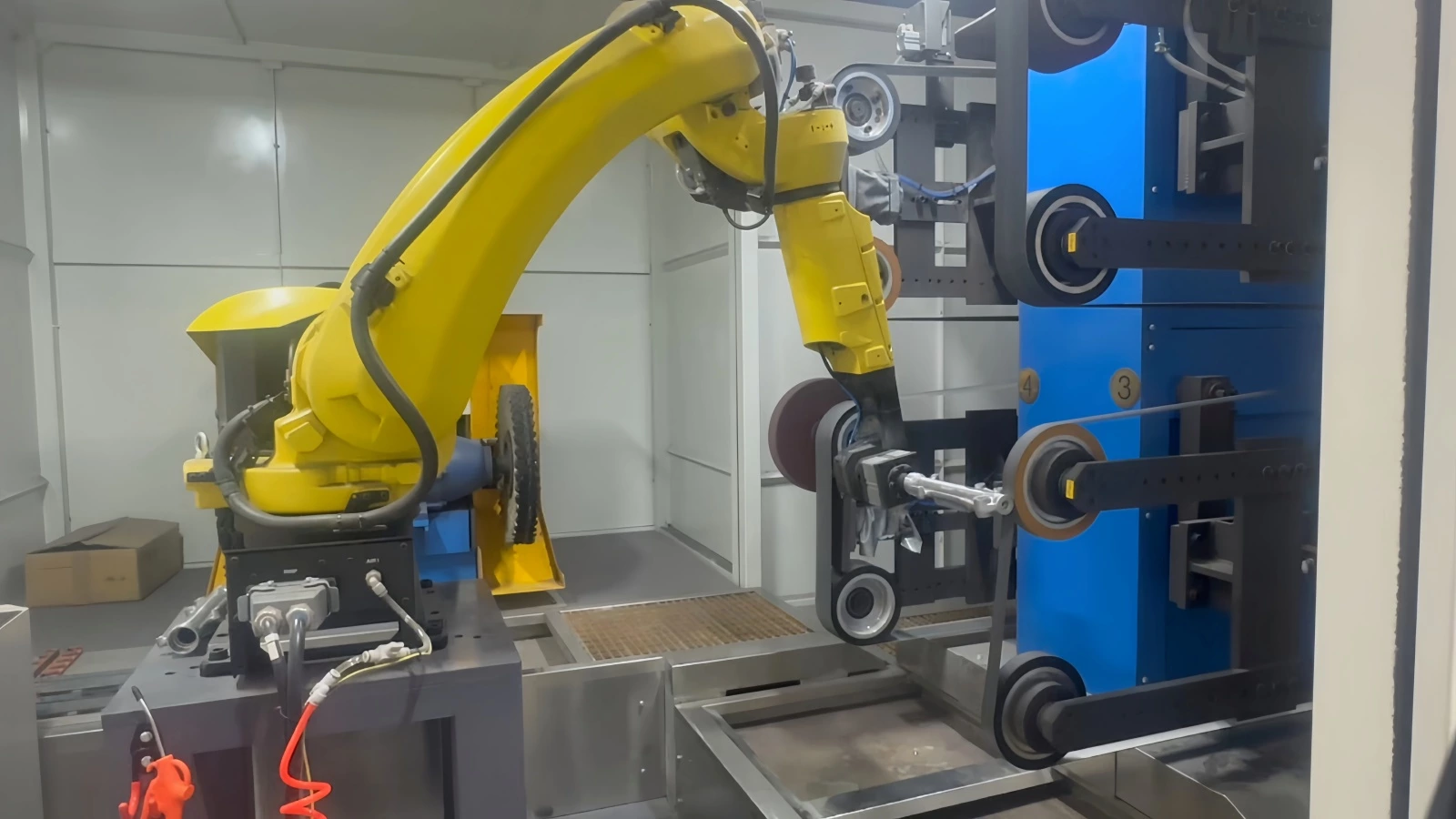
Once the cell is running steadily, start the timer when the first housing clears the fixture. Stop it when the eleventh housing clears. Divide the elapsed time by ten. Timing several consecutive releases this way captures the loading, clamping and unloading that a close-up of the cutting tool can miss.
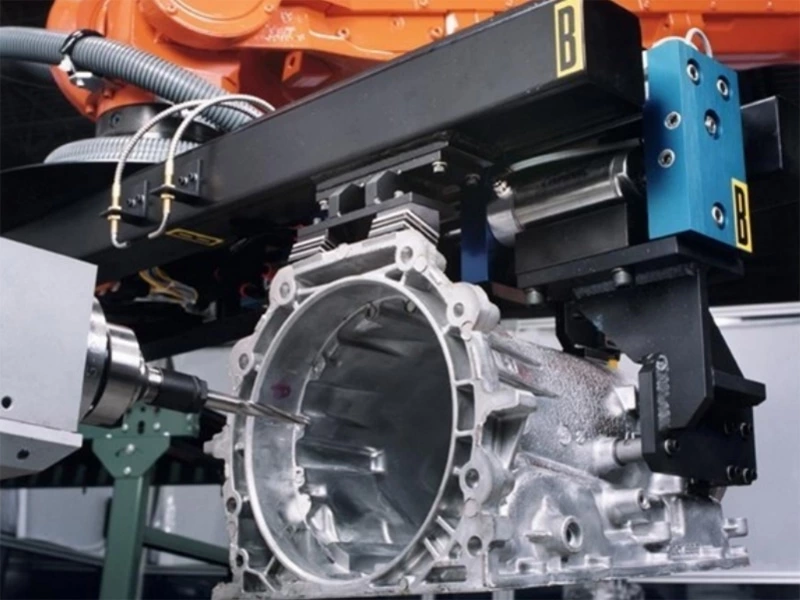
For gearbox housing deburring, mark each flange and opening that needs work, along with any sealing face the tool must clear. If the housing has to turn over so the tool can reach the underside of a flange, that movement belongs in the timed cycle.
A 90-second example for a single fixture
In this planning example, the cell processes one housing at a time. All four steps finish before the next housing is loaded.
| Step | Time per casting |
|---|---|
| Load and clamp the housing | 12 seconds |
| Deburr the specified edges | 48 seconds |
| Move between features and index the fixture | 18 seconds |
| Release, unload and reset | 12 seconds |
| Complete cell cycle | 90 seconds |
The tool is in contact for 48 seconds, and a housing leaves the cell every 90 seconds. At that pace, the cell completes 40 housings per running hour before stops or rework.
Can the cell deliver 300 good castings per shift?
Take an eight-hour shift with 30 minutes of breaks during which the cell stops. That leaves 450 production minutes. To deliver 300 accepted castings, the required pace is 450 × 60 ÷ 300 = 90 seconds per good casting. This demand-based pace is called takt time.
The example cell can just meet demand if it runs for all 450 minutes and every casting passes. A 15-minute cutter change outside the timed cycle leaves 435 minutes, enough for 290 completed castings. If five need off-line touch-up, 285 pass on the first attempt. Count the other five toward delivery only when they pass reinspection.
What to record during a production trial
Include typical castings and parts with the heaviest flash your incoming inspection accepts. Mark the edges and agree how much residual flash or edge break is acceptable. The guide to flash removal on aluminum die castings explains how to define the work around features such as flanges and openings.
Give each sample an ID. On the same row, record its full cycle time, any extra pass and the inspection result. That way, if one housing takes longer, you can see whether heavier flash required a second pass or whether the cell was waiting to be loaded. Use the sample testing guide to agree on the inspection method before the trial.
For a cycle-time review with Kingstone Robotics, send a marked-up drawing, close-up photos of the incoming flash, your loading method and the number of good parts you need per shift. Email kingstonerobot@chinamakeco.com or send the details via WhatsApp at +86 151 5987 5082.
Frequently Asked Questions
Can a drawing alone give us a cycle time?
A drawing helps estimate tool travel and access. A trial on representative castings shows how many passes the flash actually needs. Ask the supplier to identify which times were measured and which were estimated.
How should we time a cell with two fixtures?
Loading one fixture may overlap with deburring in the other. Run both fixtures and time successive part releases so that simultaneous work is counted once. If the cell releases two parts together, divide the interval between releases by two to get the average time per part.
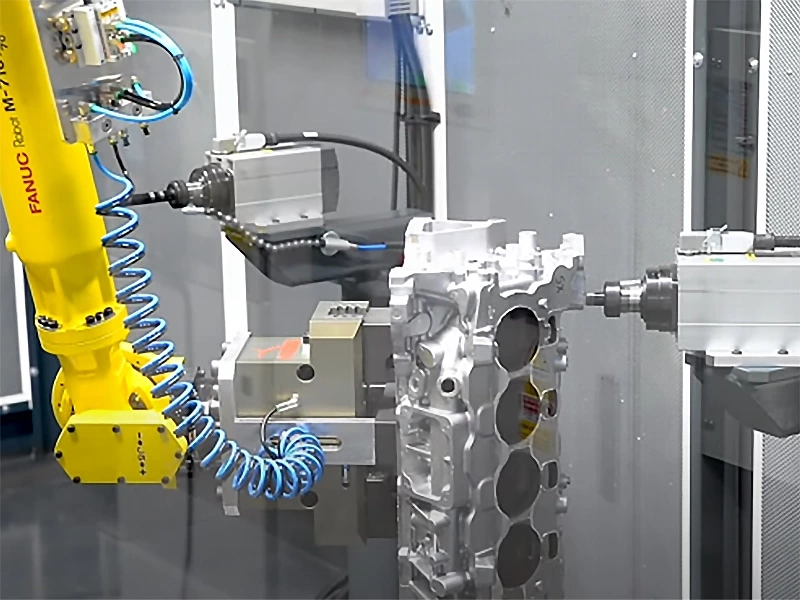
Can gearbox housings and engine cases share one cycle-time figure?
Time each part number separately. For a shift that includes both gearbox housings and engine case deburring, multiply each model’s measured cycle time by its planned quantity. Then add any fixture changes or first-piece checks that stop production.